

What is the signal transmission method of high voltage LED strips?
Mon 15,2025
Leave a message
As a supplier of High Voltage LED Strips, I've often been asked about the signal transmission methods of these innovative lighting solutions. In this blog post, I'll delve into the intricacies of how high voltage LED strips send signals, exploring the different techniques and their advantages.
Understanding High Voltage LED Strips
Before we dive into signal transmission, let's briefly understand what high voltage LED strips are. High voltage LED strips are designed to operate at a higher voltage compared to traditional low - voltage LED strips. This allows them to cover longer distances without significant voltage drops, making them ideal for large - scale lighting projects such as commercial buildings, outdoor billboards, and industrial facilities.
Signal Transmission Basics
Signal transmission in high voltage LED strips is crucial for controlling various aspects of the lighting, such as color, brightness, and flashing patterns. There are several methods used to achieve this, each with its own set of characteristics.
1. Digital Signal Transmission
Digital signal transmission is one of the most common methods used in high voltage LED strips. In this method, signals are sent in a binary format, consisting of 0s and 1s. The advantage of digital signals is their high level of accuracy and resistance to interference.
Serial Communication Protocols
Many high voltage LED strips use serial communication protocols like the WS2812 protocol. In a WS2812 - based system, each LED on the strip is an individually addressable unit. The controller sends a stream of data serially to the first LED on the strip. This LED reads the data intended for it, processes it, and then passes the remaining data along to the next LED in the chain. This way, each LED can be controlled independently, allowing for complex lighting effects such as chasing lights, color gradients, and animations.
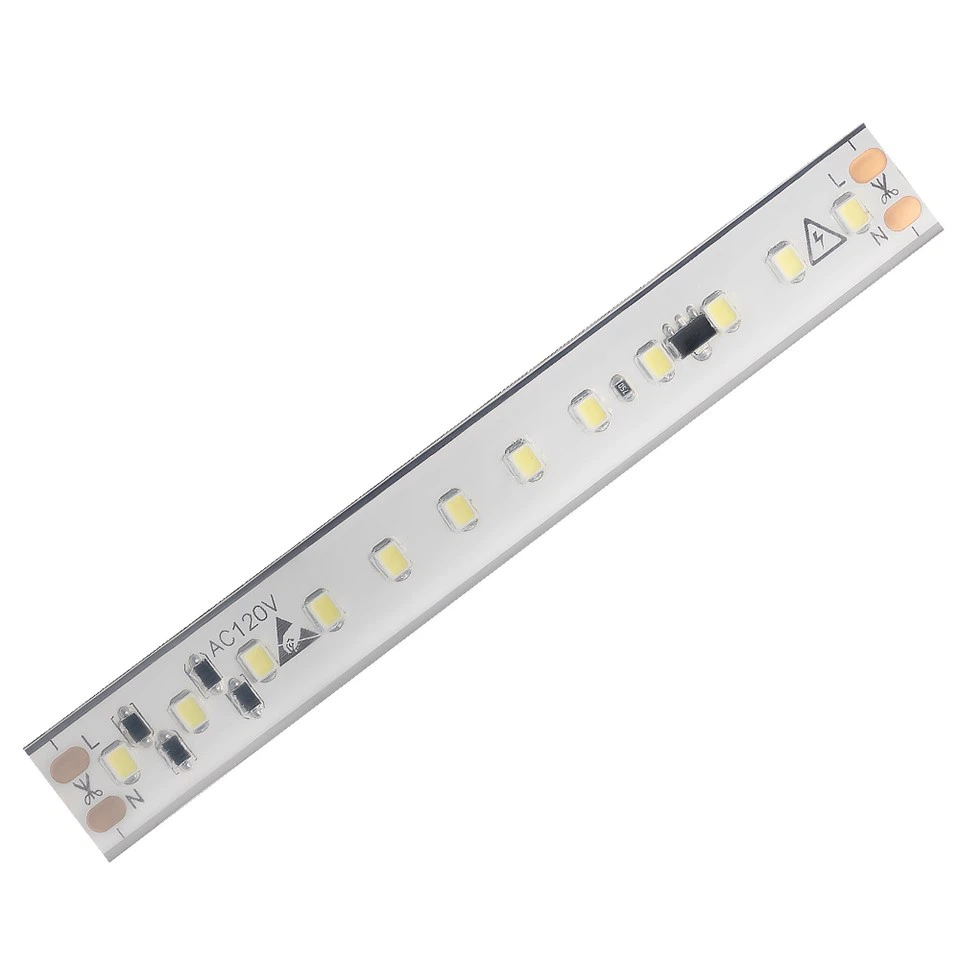
The High Voltage LED Strip 60 LED can be easily integrated with a WS2812 - compatible controller. This enables users to create dynamic lighting displays with precise control over each individual LED.
Parallel Communication
In some cases, parallel communication may be used for high voltage LED strips. In parallel communication, multiple signals are sent simultaneously over separate lines. This method is faster than serial communication as it doesn't rely on a sequential data transfer. However, it requires more wiring and is generally more complex to implement. Parallel communication is often used in applications where high - speed data transfer is essential, such as in high - end stage lighting systems.
2. Analog Signal Transmission
Analog signal transmission involves sending continuous electrical signals to control the LED strips. In the context of high voltage LED strips, analog signals are typically used to control the brightness of the LEDs.
Pulse Width Modulation (PWM)
Pulse Width Modulation is a widely used analog signal transmission technique. In PWM, the controller sends a series of pulses to the LED strip. The width of these pulses determines the average power delivered to the LEDs, and thus, their brightness. A longer pulse width means more power is delivered, resulting in a brighter light, while a shorter pulse width leads to a dimmer light.
The advantage of PWM is its simplicity and effectiveness. It can be easily implemented using a microcontroller, and it provides a smooth and continuous control over the brightness of the LED strip. For example, the High Voltage LED Strip 120 LED can be effectively controlled using PWM to create different lighting intensities for various applications.
Advantages of Different Signal Transmission Methods
Digital Signal Advantages
- Precision Control: Digital signals allow for precise control of each individual LED on the strip. This is essential for creating complex lighting effects and animations.
- Immunity to Interference: Digital signals are less susceptible to electrical interference compared to analog signals. This makes them more reliable in environments with high levels of electromagnetic noise.
- Flexibility: With digital signal transmission, it's easy to change the lighting patterns and effects by simply updating the control software.
Analog Signal Advantages
- Smooth Dimming: Analog signal transmission, especially PWM, provides smooth and continuous dimming capabilities. This is important for applications where a gradual change in brightness is required, such as in ambient lighting.
- Simple Implementation: Analog control systems are generally simpler and more cost - effective to implement compared to digital systems. They require fewer components and less complex programming.
Considerations for Signal Transmission in High Voltage LED Strips
When choosing a signal transmission method for high voltage LED strips, several factors need to be considered.
Distance
The length of the LED strip plays a crucial role in determining the appropriate signal transmission method. For longer strips, digital signal transmission may be more suitable as it can better handle the data transfer over long distances without significant loss of signal quality. Analog signals, on the other hand, may experience more significant voltage drops and interference over long distances.
Lighting Effects
The type of lighting effects you want to achieve also influences the choice of signal transmission. If you need complex animations and precise control over each LED, digital signal transmission is the way to go. For simple brightness control and smooth dimming, analog signal transmission may be sufficient.
Cost
Cost is always a consideration in any lighting project. Digital control systems, especially those with individually addressable LEDs, can be more expensive due to the complexity of the components and the need for more advanced controllers. Analog control systems are generally more budget - friendly, making them a popular choice for cost - sensitive applications.
Conclusion
In conclusion, the signal transmission method of high voltage LED strips is a critical aspect that determines their functionality and performance. Digital signal transmission offers precision control and flexibility, while analog signal transmission provides smooth dimming and simple implementation. As a supplier of high voltage LED strips, I understand the importance of choosing the right signal transmission method for different applications. Whether you're looking for the High Voltage LED Strip 60 LED for a small - scale project or the High Voltage LED Strip 120 LED for a large - scale installation, we can provide you with the right solutions.
If you're interested in purchasing high voltage LED strips or have any questions about signal transmission methods, please feel free to contact us for a detailed discussion. We're here to help you find the best lighting solutions for your needs.
References
- Nick Hunn, "LED Lighting Technology: A Guide to Solid - State Lighting".
- David A. Bell, "Electronic Devices and Circuits".
