

What is the power consumption of a high voltage LED strip?
Mon 22,2025
Leave a message
Hey there! As a supplier of High Voltage LED Strips, I often get asked about the power consumption of these nifty lighting solutions. So, I thought I'd break it down for you in this blog post.
Let's start with the basics. High Voltage LED Strips are a popular choice for a variety of lighting applications, from commercial spaces to home decor. They offer bright, energy - efficient lighting that can transform any environment. But how much power do they actually use?
First off, it's important to understand that the power consumption of a High Voltage LED Strip depends on a few key factors. One of the most significant factors is the number of LEDs per meter.
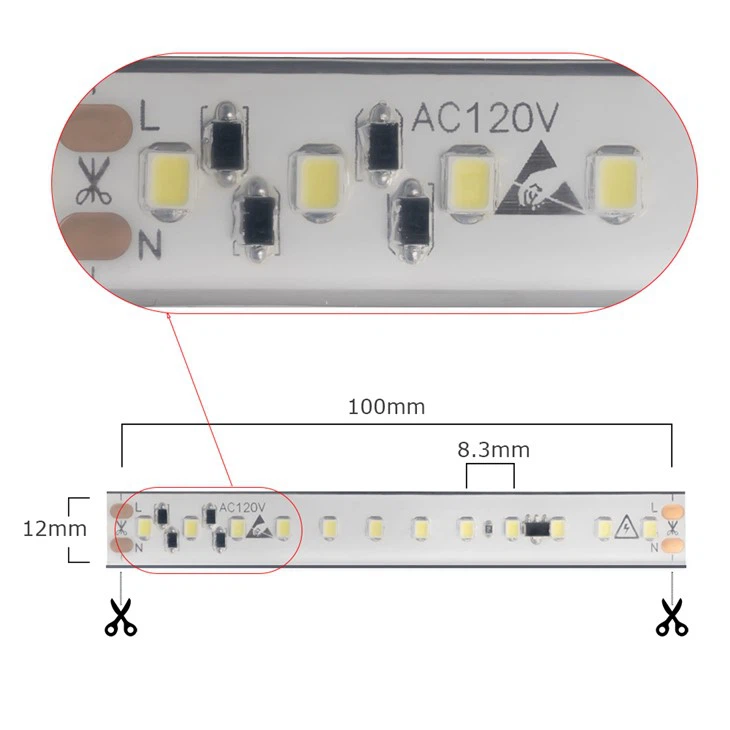
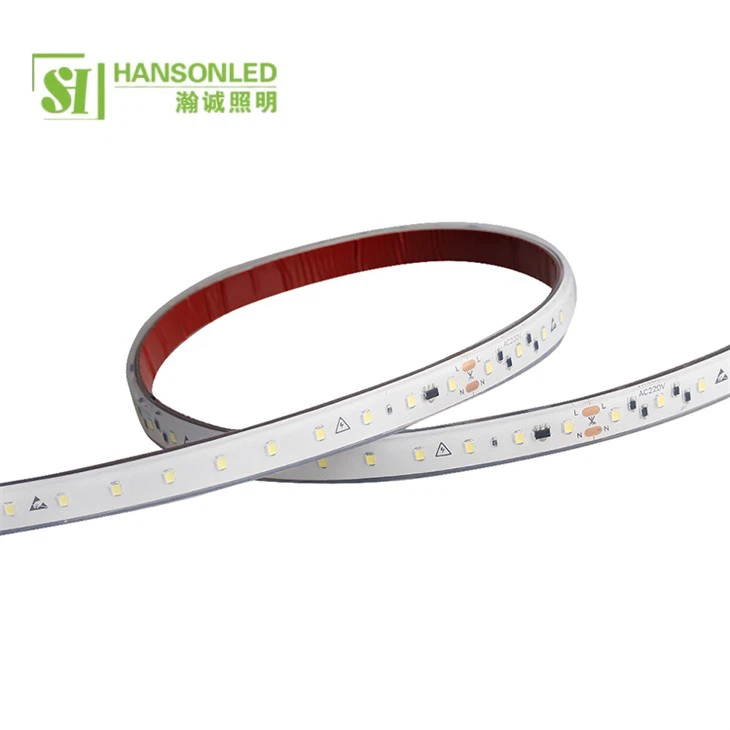
We offer two main types of High Voltage LED Strips: the High Voltage LED Strip 60 LED and the High Voltage LED Strip 120 LED. As you might expect, the strip with more LEDs will generally consume more power.
The High Voltage LED Strip 60 LED has, well, 60 LEDs per meter. Each LED in our high - voltage strips typically consumes a relatively small amount of power. On average, an individual LED in our high - voltage setup might use around 0.2 - 0.3 watts. So, for a 60 - LED strip per meter, the power consumption per meter would be approximately 12 - 18 watts.
This makes it a great option if you're looking for a more energy - efficient lighting solution. Maybe you're lighting up a small room or a display area where you don't need extremely bright light. The lower power consumption also means lower electricity bills over time, which is always a plus.
On the other hand, the High Voltage LED Strip 120 LED has double the number of LEDs per meter. With 120 LEDs, if we assume the same 0.2 - 0.3 watts per LED, the power consumption per meter jumps to around 24 - 36 watts.
This higher - density strip is ideal for larger areas or places where you need a really bright and intense light. For example, in a commercial storefront or a large event space, the High Voltage LED Strip 120 LED can create a stunning visual impact.
Another factor that affects power consumption is the color of the LEDs. Different colors have different levels of efficiency. For instance, white LEDs are generally more energy - efficient than some of the colored LEDs. Red LEDs are also relatively efficient, while blue and green LEDs might consume a bit more power to achieve the same level of brightness.
The operating voltage of the High Voltage LED Strip also plays a role. Our high - voltage strips are designed to operate at a specific voltage range. If the voltage is not within the recommended range, it can either cause the LEDs to be dimmer (and potentially consume less power but not work as intended) or, in some cases, cause them to burn out faster and potentially consume more power in an inefficient way.
It's also worth noting that the power consumption can vary slightly depending on the quality of the LEDs and the manufacturing process. At our company, we use high - quality LEDs and state - of - the - art manufacturing techniques to ensure that our strips are as energy - efficient as possible while still providing long - lasting and bright lighting.
Let's talk about how you can calculate the total power consumption for your specific lighting project. First, you need to figure out how many meters of the LED strip you're going to use. Let's say you're using the High Voltage LED Strip 60 LED and you need 5 meters. Since the power consumption per meter is around 12 - 18 watts, the total power consumption for 5 meters would be between 60 and 90 watts.
If you're using the High Voltage LED Strip 120 LED for the same 5 - meter length, with a per - meter consumption of 24 - 36 watts, the total power consumption would be between 120 and 180 watts.
Once you know the total power consumption, you can also estimate your electricity costs. You'll need to know the cost per kilowatt - hour (kWh) in your area. Most utility companies can provide you with this information.
Let's assume the cost per kWh is $0.15. If you're using a 5 - meter High Voltage LED Strip 60 LED with a total power consumption of 75 watts (let's take the middle of the 60 - 90 - watt range), first, convert the watts to kilowatts. 75 watts is 0.075 kilowatts.
If the strip is on for 10 hours a day, the energy consumption per day would be 0.075 kWh x 10 hours = 0.75 kWh. Multiply this by the cost per kWh ($0.15), and you're looking at a daily cost of about $0.1125. Over a month (assuming 30 days), that's around $3.38.
For the High Voltage LED Strip 120 LED, if we assume a total power consumption of 150 watts (middle of the 120 - 180 - watt range) for the 5 - meter strip, converting to kilowatts gives us 0.15 kilowatts. With 10 hours of use per day, the daily energy consumption is 0.15 kWh x 10 hours = 1.5 kWh. At a cost of $0.15 per kWh, the daily cost is $0.225, and the monthly cost is around $6.75.
As you can see, while the High Voltage LED Strip 120 LED consumes more power, the cost difference might not be as significant as you'd think, especially considering the increased brightness and impact it can provide.
In conclusion, understanding the power consumption of High Voltage LED Strips is crucial for making an informed decision about your lighting project. Whether you choose the High Voltage LED Strip 60 LED for its energy efficiency or the High Voltage LED Strip 120 LED for its brightness, we've got you covered.
If you're interested in learning more about our High Voltage LED Strips or are ready to start a lighting project, we'd love to hear from you. Contact us to discuss your specific needs, and we can help you choose the right product for your space and budget.
References
- General knowledge about LED technology and power consumption in the lighting industry.
- In - house testing and data on our High Voltage LED Strips.
