

What is the driving current of an LED side light bar?
Wed 02,2025
Leave a message
As a supplier of LED side light bars, I often encounter questions from customers about the driving current of these lighting products. Understanding the driving current is crucial for the proper functioning, longevity, and performance of LED side light bars. In this blog post, I will delve into the concept of driving current, its significance, and how it affects LED side light bars.
What is Driving Current?
Driving current, in the context of LED side light bars, refers to the amount of electric current that flows through the LEDs to make them emit light. LEDs are semiconductor devices, and their light - emitting properties are directly related to the current passing through them. Unlike traditional incandescent bulbs, which rely on heating a filament to produce light, LEDs operate based on the principle of electroluminescence. When an appropriate current is applied, electrons recombine with electron holes within the semiconductor material, releasing energy in the form of light.
The unit of measurement for current is the ampere (A), but in the case of LEDs, the current is typically measured in milliamperes (mA). A typical LED in a side light bar may require a driving current in the range of 20 - 60 mA, depending on its type, size, and intended application.
Importance of Correct Driving Current
Light Output
The driving current has a direct impact on the light output of an LED side light bar. Generally, as the driving current increases, the light output of the LEDs also increases. However, this relationship is not linear. There is an optimal current range for each LED where it can produce the maximum amount of light efficiently. If the current is too low, the LEDs will emit a dim light, which may not meet the requirements of the application. For example, in a vehicle side light bar used for off - road lighting, insufficient current will result in poor visibility, reducing safety.
Lifespan
Applying the correct driving current is essential for the longevity of LED side light bars. LEDs are sensitive to over - current conditions. When the driving current exceeds the recommended value, the LEDs may overheat. Excessive heat can cause damage to the semiconductor material, leading to a reduction in the lifespan of the LEDs. In some cases, over - current can even cause immediate failure of the LEDs. On the other hand, if the current is too low, although the LEDs may still function, they may not reach their full potential in terms of lifespan, as they may not be operating under the optimal conditions.
Color Temperature
The driving current can also affect the color temperature of the light emitted by the LEDs. Color temperature is a measure of the color appearance of light, with lower values corresponding to warmer (more yellow - red) light and higher values corresponding to cooler (more blue - white) light. Deviating from the recommended driving current can cause a shift in the color temperature, which may be undesirable in applications where color accuracy is important, such as in photography or stage lighting.
Factors Affecting Driving Current Requirements
LED Type
There are different types of LEDs used in side light bars, such as high - power LEDs and standard - power LEDs. High - power LEDs typically require a higher driving current to produce a significant amount of light. For example, some high - power LEDs used in industrial - grade side light bars may require a driving current of 350 mA or more, while standard - power LEDs used in decorative side light bars may only need 20 - 30 mA.
Number of LEDs in Series and Parallel
In an LED side light bar, the LEDs are often arranged in series and parallel circuits. When LEDs are connected in series, the current flowing through each LED is the same. However, the total voltage across the series - connected LEDs is the sum of the voltages across each individual LED. In a parallel circuit, the voltage across each LED is the same, but the total current is divided among the parallel - connected LEDs. The way the LEDs are arranged in the side light bar affects the overall driving current requirements. For example, if you have a side light bar with multiple LEDs connected in parallel, the power supply needs to be able to provide a higher total current to ensure that each LED receives the appropriate amount of current.
Environmental Conditions
Environmental factors such as temperature can also affect the driving current requirements of LED side light bars. LEDs tend to have a lower forward voltage at higher temperatures. This means that if the temperature increases, the same driving current may cause the LEDs to draw more power, potentially leading to over - heating. In hot environments, it may be necessary to adjust the driving current to ensure the safe and efficient operation of the LEDs.
Controlling the Driving Current
Constant - Current Drivers
To ensure that the LEDs in a side light bar receive the correct driving current, constant - current drivers are commonly used. A constant - current driver is an electronic device that regulates the current flowing through the LEDs, regardless of changes in the input voltage or the characteristics of the LEDs. These drivers can automatically adjust the voltage to maintain a constant current. For example, if the input voltage fluctuates due to changes in the power source, the constant - current driver will adjust the output voltage to keep the current flowing through the LEDs at the set value.
Resistors
In some simple LED side light bar circuits, resistors can be used to control the driving current. A resistor is placed in series with the LEDs to limit the current. The value of the resistor is calculated based on the supply voltage, the forward voltage of the LEDs, and the desired driving current. However, using resistors has some limitations. Resistors dissipate power in the form of heat, which can reduce the overall efficiency of the circuit. Additionally, resistors do not provide the same level of precision as constant - current drivers, especially when there are variations in the input voltage or the characteristics of the LEDs.
Our LED Side Light Bar Products
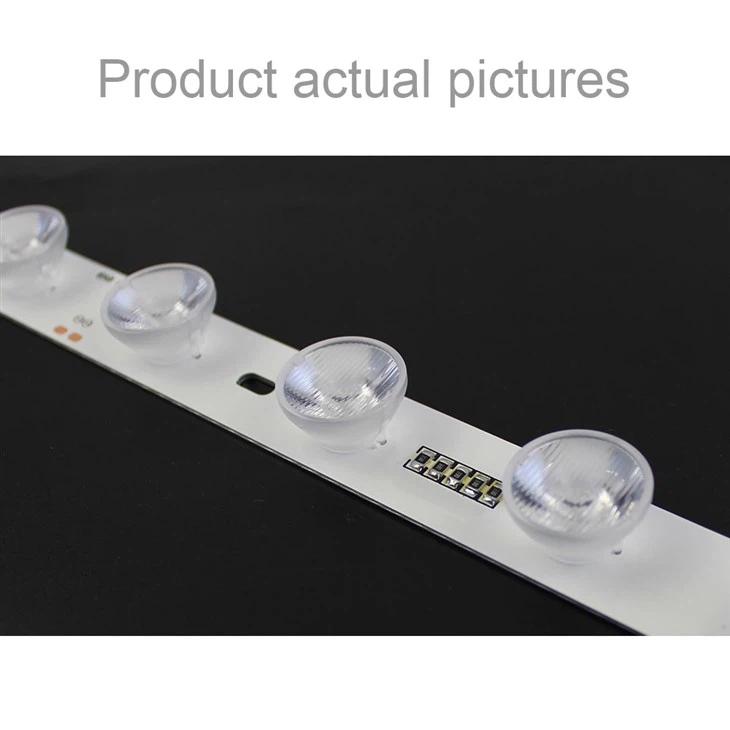
At our company, we offer a wide range of LED Side Rigid Bar products suitable for various applications. Our LED Rigid Bar and LED Rigid Bar For Lighting Box are designed with high - quality LEDs and advanced constant - current drivers to ensure optimal performance.
We understand the importance of providing the correct driving current to our LEDs. That's why we carefully select the components and conduct rigorous testing to ensure that our side light bars operate within the recommended current range. Our products are known for their high - brightness, long lifespan, and stable color temperature, making them ideal for automotive, industrial, and decorative lighting applications.
Contact Us for Procurement
If you are interested in our LED side light bar products and would like to discuss your specific requirements, we encourage you to contact us. Whether you need a custom - designed side light bar or a standard product, our team of experts is ready to assist you. We can provide detailed information about the driving current requirements, technical specifications, and pricing of our products. Let's work together to find the perfect lighting solution for your needs.
References
- "LED Lighting Handbook" by Philips Lighting
- "Solid - State Lighting Technology and Applications" by Michael S. Shur and Dmitri L. Burak
- "Fundamentals of Lighting Technology" by John F. Waymouth
