

What is the heat dissipation performance of the 2835 LED Strip 120 LED?
Tue 15,2025
Leave a message
As a supplier of the 2835 LED Strip with 120 LEDs, I've had the privilege of delving deep into the intricacies of this remarkable lighting product. One of the most critical aspects that customers often inquire about is its heat dissipation performance. In this blog, I'll explore the heat dissipation capabilities of the 2835 LED Strip 120 LED, shedding light on the factors that influence it and why it matters in real - world applications.
Understanding the Basics of Heat Generation in LEDs
Before we dive into the heat dissipation performance of the 2835 LED Strip 120 LED, it's essential to understand why LEDs generate heat in the first place. LEDs, or Light - Emitting Diodes, are semiconductor devices that convert electrical energy into light. However, this conversion process is not 100% efficient. A significant portion of the electrical energy is lost as heat. When an electric current passes through the LED chip, the electrons and holes recombine to produce photons (light), but some of the energy is dissipated as heat due to the resistance within the semiconductor material and other internal processes.
In the case of the 2835 LED Strip 120 LED, with 120 individual LEDs densely packed on a single strip, the cumulative heat generation can be substantial. If not properly managed, this heat can have a detrimental impact on the performance and lifespan of the LEDs.
Factors Affecting Heat Dissipation in 2835 LED Strip 120 LED
1. LED Chip Quality
The quality of the LED chips used in the 2835 LED Strip 120 LED plays a crucial role in heat generation and dissipation. High - quality LED chips are designed with better semiconductor materials and manufacturing processes, which result in lower internal resistance. Lower resistance means less energy is wasted as heat during the operation of the LEDs. For example, chips from well - known manufacturers often have more efficient electron - hole recombination processes, leading to higher luminous efficacy and less heat production compared to lower - quality alternatives.
2. PCB (Printed Circuit Board) Design
The PCB on which the LEDs are mounted is another key factor in heat dissipation. A well - designed PCB should have good thermal conductivity. The 2835 LED Strip typically uses a flexible PCB, and the material and thickness of the PCB can affect how quickly heat is transferred away from the LEDs. For instance, PCBs with a copper base layer have better thermal conductivity than those with a fiberglass base. Additionally, the layout of the traces on the PCB can influence heat distribution. A PCB with wider traces can carry more current with less resistance, reducing heat generation, and also help in spreading the heat more evenly across the strip.
3. Heat Sink and Thermal Interface Materials
In some applications, especially those where the 2835 LED Strip 120 LED is used in high - power or high - density lighting setups, additional heat sinks and thermal interface materials may be employed. A heat sink is a passive component that increases the surface area available for heat dissipation. It absorbs the heat from the LEDs and transfers it to the surrounding air. Thermal interface materials, such as thermal paste or pads, are used to fill the microscopic gaps between the LEDs and the heat sink, improving the thermal contact and enhancing heat transfer efficiency.
4. Airflow and Ventilation
The environment in which the 2835 LED Strip 120 LED is installed also affects its heat dissipation. Adequate airflow and ventilation can significantly improve the cooling of the LEDs. If the strip is installed in an enclosed space with poor air circulation, the heat will accumulate around the LEDs, leading to higher operating temperatures. On the other hand, if there is a constant flow of fresh air over the strip, the heat can be carried away more effectively. For example, in an open - ceiling installation or a setup with a fan blowing air over the strip, the heat dissipation will be much better compared to a sealed cabinet.
Measuring the Heat Dissipation Performance
Thermal Resistance
Thermal resistance is a key metric used to quantify the heat dissipation performance of the 2835 LED Strip 120 LED. It is defined as the temperature difference between the LED junction (where the heat is generated) and the ambient temperature per unit of power dissipated. A lower thermal resistance indicates better heat dissipation. For the 2835 LED Strip, the thermal resistance can be affected by all the factors mentioned above, such as the LED chip quality, PCB design, and presence of heat sinks.
Junction Temperature
The junction temperature of the LEDs is another important parameter. It is the temperature at the actual semiconductor junction within the LED chip. High junction temperatures can cause a decrease in luminous flux (brightness), color shift, and a reduction in the lifespan of the LEDs. By monitoring the junction temperature under different operating conditions, we can assess the effectiveness of the heat dissipation system. For the 2835 LED Strip 120 LED, manufacturers usually specify a maximum allowable junction temperature, and it's crucial to ensure that the actual operating temperature stays below this limit.
Benefits of Good Heat Dissipation
Extended Lifespan
One of the most significant benefits of good heat dissipation in the 2835 LED Strip 120 LED is an extended lifespan. LEDs are sensitive to high temperatures, and excessive heat can accelerate the degradation of the semiconductor material and the packaging. By keeping the junction temperature low through effective heat dissipation, the LEDs can operate for a longer time without significant loss of performance. This means less frequent replacement of the LED strips, reducing maintenance costs for the end - user.
Consistent Performance
Proper heat dissipation also ensures consistent performance of the 2835 LED Strip 120 LED. When the LEDs operate at a stable temperature, the luminous flux and color rendering index (CRI) remain more consistent over time. This is especially important in applications where color accuracy and uniform brightness are required, such as in retail lighting, museum lighting, and stage lighting.
Real - World Applications and Heat Dissipation Considerations
Indoor Lighting
In indoor lighting applications, such as in homes, offices, and commercial buildings, the 2835 LED Strip 120 LED is often used for accent lighting, cove lighting, or under - cabinet lighting. In these settings, the ambient temperature is usually relatively stable, and there is generally some natural airflow. However, if the LED strip is installed in a confined space, like a narrow cabinet, special attention should be paid to heat dissipation. For example, leaving some gaps for air circulation or using a heat - dissipating backer board can help maintain a reasonable operating temperature.
Outdoor Lighting
Outdoor lighting applications present more challenging conditions for heat dissipation. The 2835 LED Strip 120 LED may be exposed to a wider range of temperatures, from extreme cold in winter to high heat in summer. Additionally, outdoor environments may have dust, moisture, and UV radiation, which can affect the performance of the LEDs and the heat dissipation system. In such cases, the LED strip should be properly sealed to protect it from the elements, and a more robust heat dissipation design may be required, such as a larger heat sink or a waterproof and breathable enclosure.
Our Product Offerings and Heat Dissipation Features
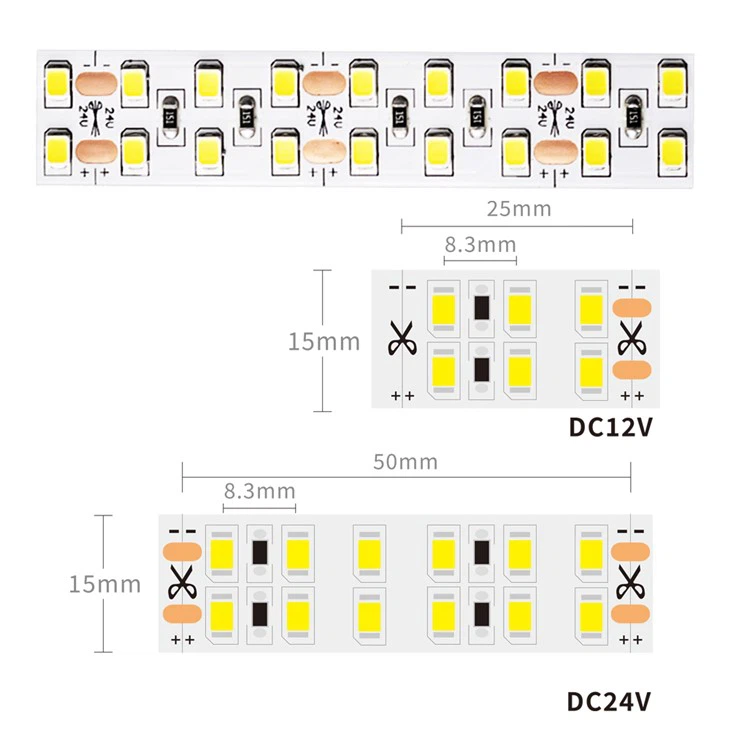
We, as a supplier of the 2835 LED Strip 120 LED, offer a range of products with different features to meet various heat dissipation requirements. Our Dual White 2835 LED Strip is designed with high - quality LED chips that have low heat generation. The flexible PCB used in this strip has excellent thermal conductivity, allowing for efficient heat transfer. For customers who need a more powerful lighting solution, our Double Line 2835 LED Strip is a great option. It has a double - row LED configuration, but we've optimized the PCB layout and used enhanced thermal management techniques to ensure proper heat dissipation. And for applications where space is limited, our 5mm LED Strip Light is a compact yet efficient choice, with a design that focuses on maximizing heat dissipation within a small form factor.
Conclusion
The heat dissipation performance of the 2835 LED Strip 120 LED is a complex but crucial aspect that affects its performance, lifespan, and suitability for different applications. By understanding the factors that influence heat dissipation, such as LED chip quality, PCB design, heat sink usage, and airflow, we can ensure that the LED strip operates at an optimal temperature. As a supplier, we are committed to providing high - quality products with excellent heat dissipation features to meet the diverse needs of our customers.
If you are interested in our 2835 LED Strip 120 LED products or have any questions about heat dissipation and lighting solutions, we encourage you to contact us for further discussion and potential procurement. We look forward to working with you to find the best LED lighting solutions for your projects.
References
- "LED Lighting Handbook" by Fred E. Schubert and Jong Kyu Kim
- Industry reports on LED technology and heat management from lighting research institutions.
