

Can an LED side light bar be connected in parallel?
Wed 23,2025
Leave a message
Hey there! As a supplier of LED Side Light Bars, I often get asked a whole bunch of questions from customers. One question that pops up quite frequently is, "Can an LED side light bar be connected in parallel?" Today, I'm gonna break this down for you in a way that's easy to understand.
First off, let's quickly go over what parallel connection means. When you connect electrical components in parallel, each component gets connected across the same voltage source. In simpler terms, it's like having multiple paths for the electricity to flow, and each LED side light bar in the parallel setup will have the full voltage of the power source applied to it.
Now, the short answer is yes, an LED side light bar can be connected in parallel. But there are a few things you gotta keep in mind before you go ahead and do it.
Advantages of Parallel Connection
One of the major perks of connecting LED side light bars in parallel is that if one light bar fails or malfunctions, the others will keep on shining. That's because each light bar has its own independent path for the electrical current. For example, if you're using LED side light bars to light up a display case and one bar burns out, the rest of the display will still be well - lit.
Another advantage is that it's relatively easy to install. You don't have to worry about calculating the total resistance of a series circuit. All you need to do is connect the positive terminals of all the light bars together and the negative terminals together. It's a straightforward process, even for those who aren't electrical experts.
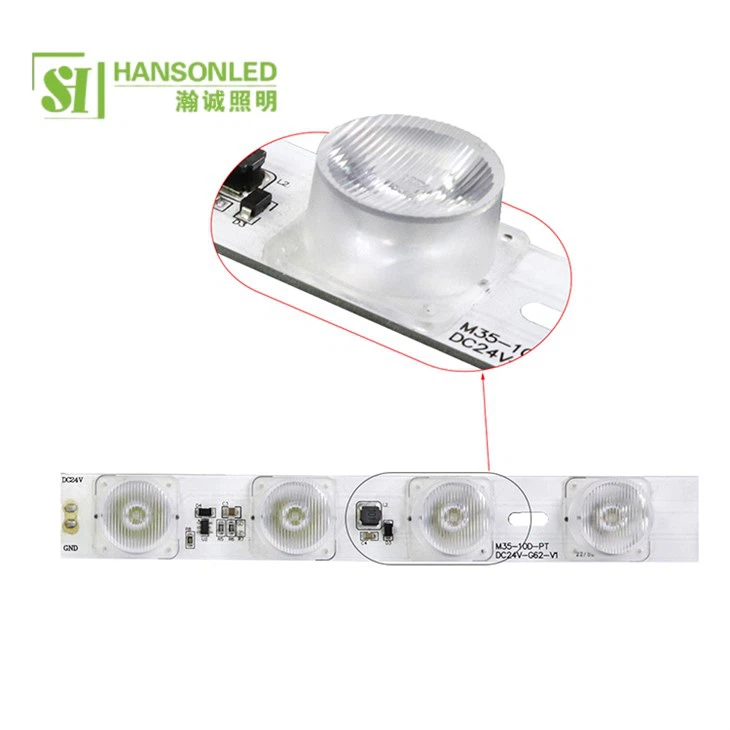
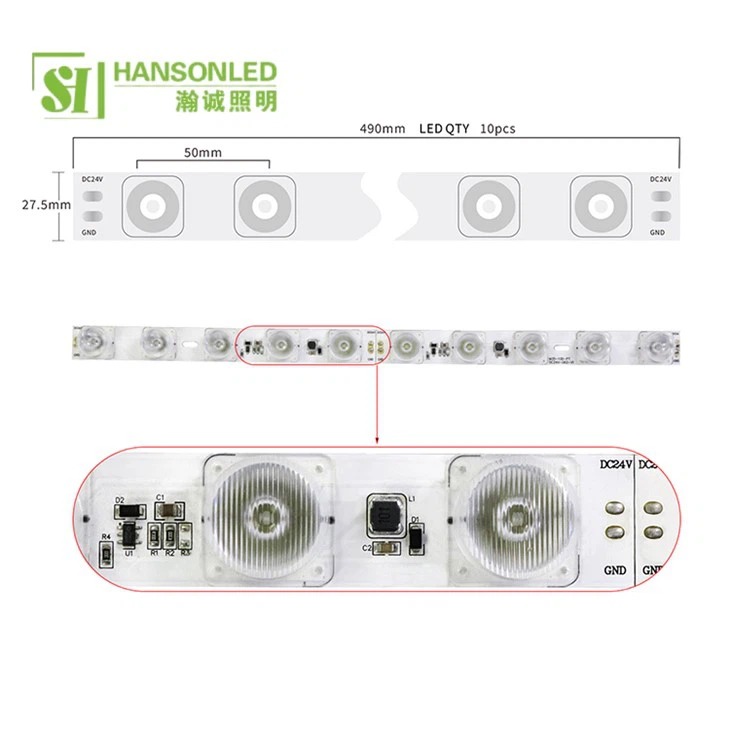
Considerations Before Connecting in Parallel
However, there are some factors you need to take into account. First, you need to make sure that your power supply can handle the total current required by all the light bars. Each LED side light bar draws a certain amount of current, and when you connect them in parallel, the total current drawn from the power supply is the sum of the currents of each individual light bar.
Let's say you have a power supply that can provide a maximum of 5 amps of current. If each of your Edge - lit LED ribbon draws 1 amp, you can only connect up to 5 of them in parallel. If you try to connect more, you might overload the power supply, which can lead to overheating and potentially damage the power supply or the light bars.
You also need to ensure that all the light bars you're connecting in parallel are of the same type and have the same voltage rating. If you mix different types of light bars with different voltage requirements, it can cause uneven lighting or even damage the light bars.
How to Connect LED Side Light Bars in Parallel
Connecting LED side light bars in parallel is a fairly simple process. Here's a step - by - step guide:
- Gather your materials: You'll need your LED side light bars, a power supply, and some electrical wire. Make sure the power supply has the correct voltage for your light bars.
- Prepare the light bars: Check the positive and negative terminals of each light bar. Usually, the positive terminal is marked with a plus sign (+) and the negative with a minus sign (-).
- Connect the positive terminals: Use the electrical wire to connect all the positive terminals of the light bars together. You can use wire connectors or solder the connections for a more secure joint.
- Connect the negative terminals: Similarly, connect all the negative terminals of the light bars together using the electrical wire.
- Connect to the power supply: Once all the light bars are connected in parallel, connect the combined positive and negative wires to the corresponding terminals of the power supply.
Real - World Applications
LED side light bars connected in parallel have a wide range of applications. In the automotive industry, they can be used for interior lighting. You can connect multiple LED Edge Light Bar in parallel to create a custom - lit dashboard or footwell.
In the architectural field, they're great for accent lighting in buildings. You can use them to highlight the edges of stairs, columns, or windows. By connecting them in parallel, you can ensure uniform lighting and easy maintenance.
In the retail sector, LED side light bars are used to illuminate display shelves. If you have a large store with multiple display areas, connecting the light bars in parallel allows you to control the lighting of each area independently.
Quality Matters
When it comes to LED side light bars, quality is of the essence. A Quality Led Light Bar will not only provide better lighting but also last longer. High - quality light bars are more resistant to voltage fluctuations and are less likely to burn out prematurely.
Cheaper, low - quality light bars might seem like a good deal at first, but they can cause problems in the long run. They might not have proper heat dissipation, which can lead to overheating and reduced lifespan. So, always invest in quality light bars, especially if you're planning to connect them in parallel for a large - scale installation.
Conclusion
In conclusion, yes, an LED side light bar can be connected in parallel, and it offers several advantages such as independent operation and easy installation. But you need to be careful about your power supply capacity and use light bars of the same type and voltage rating.
If you're interested in purchasing high - quality LED side light bars for your project, whether it's for automotive, architectural, or retail use, I'd love to talk to you. We have a wide range of LED side light bars that are suitable for parallel connection. Just reach out, and we can discuss your specific requirements and find the best solution for you.
References
- Electrical Engineering Basics: A Guide to Understanding Circuits, 2nd Edition
- LED Lighting Handbook: Applications and Installation
