

What are the precautions when connecting a Regular LED Strip in parallel?
Fri 03,2025
Leave a message
Hey there! As a supplier of Regular LED Strips, I've seen my fair share of folks trying to connect these strips in parallel. It's a pretty common way to light up larger areas, but there are some key precautions you gotta keep in mind. Let's dive right in.
Power Supply Capacity
First off, power supply capacity is super important. When you connect LED strips in parallel, you're essentially increasing the total current draw. Each strip needs power, and if your power supply can't handle the combined load, things can go wrong real fast.
Think of it like a water pipe. If you try to push too much water through a small pipe, it'll either burst or the water flow will be really weak. Similarly, if your power supply can't provide enough current, the LED strips might not shine as brightly as they should, or they could even flicker or stop working altogether.
Before you start connecting, check the power requirements of each LED strip. Usually, the specs will tell you how many watts or amps each strip uses. Add up the power needs of all the strips you plan to connect in parallel. Then, make sure your power supply can handle that total load. For example, if you're connecting three 2835 LED Strip 60 LED strips, and each one uses 10 watts, you'll need a power supply that can provide at least 30 watts.
Voltage Drop
Another thing to watch out for is voltage drop. When you run a long length of wire or connect multiple strips in parallel, the voltage at the end of the line can be lower than at the beginning. This can cause the LEDs at the far end to be dimmer than those closer to the power supply.
To minimize voltage drop, use thicker wires. Thicker wires have less resistance, which means less voltage loss. Also, try to keep the wire runs as short as possible. If you're dealing with a large area, you might need to split the strips into smaller groups and connect each group to the power supply separately.
Let's say you're using 5mm LED Strip Light to light up a long hallway. Instead of connecting all the strips in one long line, break them into sections and connect each section to the power supply near the middle. This way, you can keep the voltage more consistent across all the LEDs.
Polarity
Polarity is a big deal when it comes to LED strips. LEDs are diodes, which means they only work when the current flows in one direction. If you connect the strips with the wrong polarity, they won't light up at all.
Most LED strips have markings to indicate the positive and negative terminals. Make sure you match up the positive terminal of one strip with the positive terminal of the power supply and the negative terminal with the negative terminal. It might seem obvious, but it's easy to get confused, especially when you're dealing with multiple strips.
If you're not sure which is the positive and negative, you can use a multimeter to check. Just set the multimeter to the voltage setting and touch the probes to the terminals. If the reading is positive, you've got the right polarity.
Heat Dissipation
LEDs generate heat, and when you connect multiple strips in parallel, the heat can add up. If the heat isn't dissipated properly, it can shorten the lifespan of the LEDs and even cause them to fail.
Make sure you install the LED strips in a well-ventilated area. Avoid enclosing them in tight spaces where the heat can build up. You can also use heat sinks or thermal pads to help transfer the heat away from the LEDs.

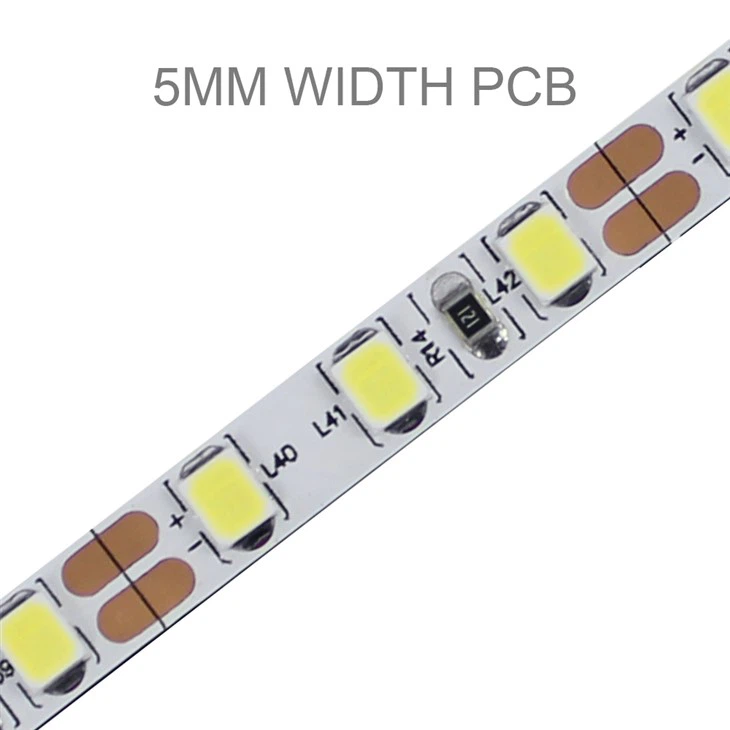
For example, if you're using 2835 LED Strip 240 LED to light up a cabinet, leave some gaps between the strips and the sides of the cabinet to allow air to circulate.
Electrical Safety
Last but not least, electrical safety is crucial. Always make sure the power is turned off before you start connecting the LED strips. Use insulated tools to avoid getting shocked. And if you're not confident in your electrical skills, it's best to hire a professional.
Also, make sure all the connections are secure. Loose connections can cause arcing, which is a fire hazard. Use proper connectors and solder the joints if necessary.
Conclusion
Connecting Regular LED Strips in parallel can be a great way to light up large areas, but it's important to take the right precautions. Make sure your power supply can handle the load, minimize voltage drop, get the polarity right, manage heat dissipation, and prioritize electrical safety.
If you're looking for high-quality Regular LED Strips for your next project, I'm here to help. We've got a wide range of products to choose from, and our team can provide you with all the support you need. Whether you're a DIY enthusiast or a professional installer, we've got you covered. So, if you're interested in purchasing our LED strips or have any questions, feel free to reach out. Let's work together to bring your lighting ideas to life!
References
- General knowledge about LED strip installation and electrical engineering principles.
