

Are RGB LED modules suitable for backlighting LCD screens?
Fri 14,2025
Leave a message
RGB LED modules have gained significant popularity in recent years, especially in the realm of backlighting for LCD screens. As a supplier of RGB LED modules, I have witnessed firsthand the growing interest in these products and the potential they hold for enhancing the visual experience of LCD displays. In this blog post, I will explore the suitability of RGB LED modules for backlighting LCD screens, discussing their advantages, limitations, and key considerations.
Advantages of RGB LED Modules for LCD Backlighting
One of the primary advantages of using RGB LED modules for LCD backlighting is the ability to achieve a wider color gamut. Traditional white LED backlights typically have a limited color range, which can result in less vibrant and accurate colors on the LCD screen. In contrast, RGB LED modules can produce a much broader spectrum of colors by combining red, green, and blue light. This allows for more vivid and lifelike color reproduction, making images and videos appear more engaging and realistic.
Another benefit of RGB LED modules is their high level of controllability. Unlike traditional backlights, which often have a fixed color temperature and brightness, RGB LED modules can be individually controlled to adjust the color and intensity of the backlight. This flexibility allows for greater customization and optimization of the display's visual performance, depending on the specific application and user preferences. For example, in a professional video editing environment, RGB LED backlighting can be adjusted to provide accurate color representation for color-critical tasks.
RGB LED modules also offer improved energy efficiency compared to some traditional backlighting technologies. LEDs are known for their low power consumption and long lifespan, which can result in significant energy savings over time. Additionally, the ability to control the brightness and color of the backlight individually allows for further energy optimization, as the backlight can be dimmed or adjusted to match the content being displayed.
Limitations of RGB LED Modules for LCD Backlighting
Despite their many advantages, RGB LED modules also have some limitations that need to be considered when using them for LCD backlighting. One of the main challenges is the complexity of color mixing. Achieving accurate and consistent color reproduction requires precise control of the intensity of each RGB channel. Any variations in the LED characteristics or the driving circuitry can result in color inaccuracies or uneven color distribution across the screen. This can be particularly problematic in large displays or applications where color accuracy is critical.
Another limitation is the cost. RGB LED modules are generally more expensive than traditional white LED backlights. The additional cost is mainly due to the complexity of the RGB LED technology and the need for more sophisticated driving and control circuitry. This can make RGB LED backlighting less cost-effective for some applications, especially in price-sensitive markets.
Heat management is also a concern when using RGB LED modules for backlighting. LEDs generate heat during operation, and excessive heat can affect the performance and lifespan of the LEDs. In a backlighting application, effective heat dissipation is crucial to ensure the long-term reliability and stability of the display. This may require the use of additional heat sinks or cooling systems, which can add to the overall cost and complexity of the design.
Key Considerations for Using RGB LED Modules in LCD Backlighting
When considering using RGB LED modules for LCD backlighting, there are several key factors that need to be taken into account.
Color Accuracy and Uniformity: As mentioned earlier, achieving accurate and uniform color reproduction is essential for a high-quality display. It is important to choose RGB LED modules with good color consistency and to use a reliable color management system to ensure that the colors are accurately reproduced across the screen.
Driving and Control Circuitry: The driving and control circuitry play a crucial role in the performance of RGB LED backlighting. It is necessary to select a driving circuit that can provide precise control of the RGB channels and ensure stable operation. Additionally, the control system should be able to communicate effectively with the display's controller to adjust the backlight settings based on the content being displayed.
Heat Dissipation: Proper heat management is vital to ensure the long-term reliability of the RGB LED modules. This may involve using heat sinks, fans, or other cooling methods to dissipate the heat generated by the LEDs. The design of the backlight module should also take into account the airflow and thermal conductivity to optimize the heat dissipation efficiency.
Cost and Budget: The cost of RGB LED backlighting is an important consideration, especially for large-scale applications or price-sensitive markets. It is necessary to evaluate the cost-benefit ratio and determine whether the additional features and performance of RGB LED backlighting justify the higher cost.

Our RGB LED Module Offerings
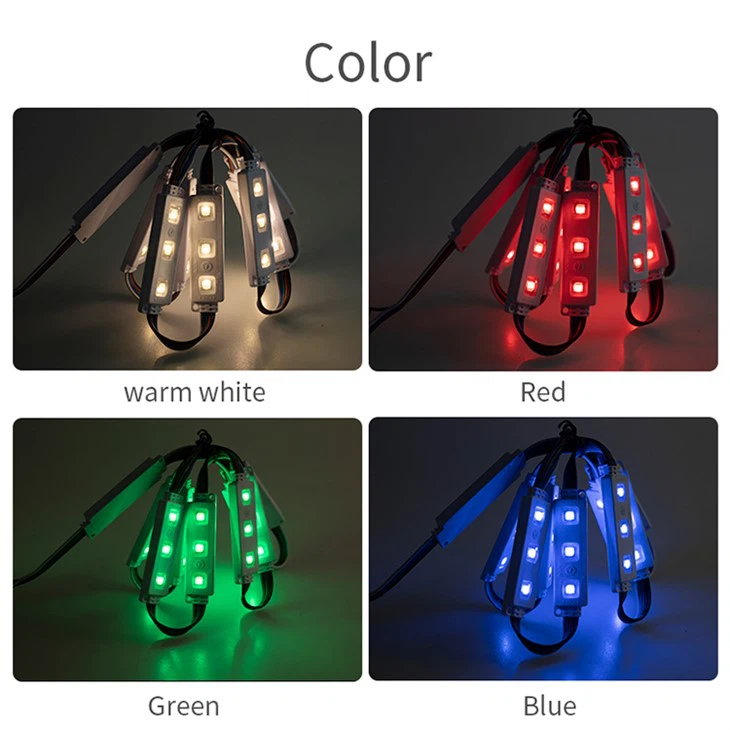
As a supplier of RGB LED modules, we offer a wide range of products to meet the diverse needs of our customers. Our RGBW LED Module combines the benefits of RGB with an additional white channel, providing even greater flexibility in color mixing and achieving a wider color gamut. Our RGB 3 LED Module is designed for applications where a compact and high-performance RGB solution is required. And our Led RGB Module offers a reliable and cost-effective option for various backlighting applications.
We understand the challenges and requirements of using RGB LED modules for LCD backlighting, and our team of experts is dedicated to providing high-quality products and technical support. We work closely with our customers to understand their specific needs and develop customized solutions that meet their requirements.
Conclusion
RGB LED modules offer significant advantages for backlighting LCD screens, including a wider color gamut, high controllability, and energy efficiency. However, they also have some limitations, such as color mixing complexity, cost, and heat management. When considering using RGB LED modules for LCD backlighting, it is important to carefully evaluate the specific requirements of the application and take into account the key considerations mentioned above.
If you are interested in exploring the use of RGB LED modules for your LCD backlighting needs, we invite you to contact us for more information. Our team of experts is ready to assist you in selecting the right product and providing the necessary technical support. We look forward to the opportunity to work with you and help you achieve the best visual performance for your displays.
References
- "LED Lighting Technology: Principles and Applications" by John A. Reilly
- "Color Science: Concepts and Methods, Quantitative Data and Formulae" by Gunter Wyszecki and W. S. Stiles
