


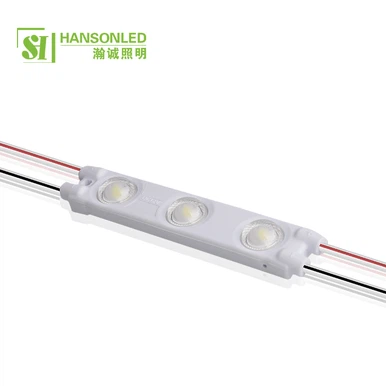
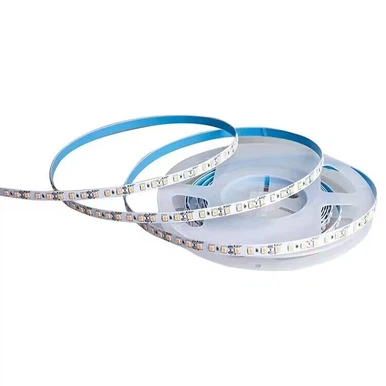
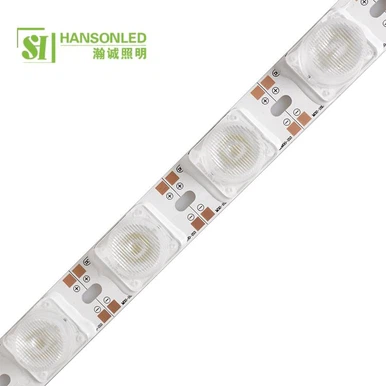
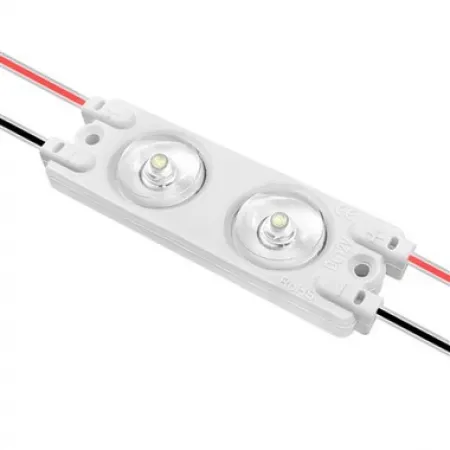
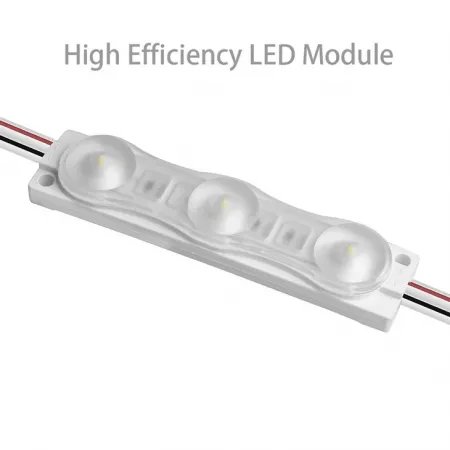
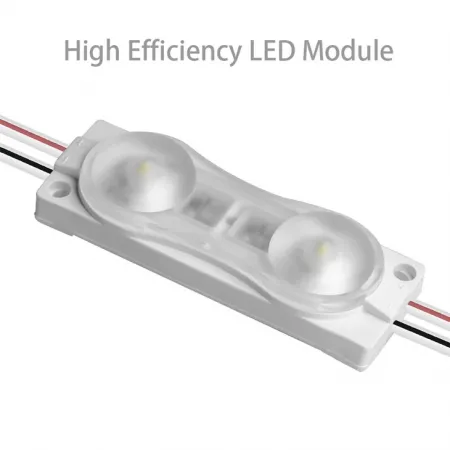
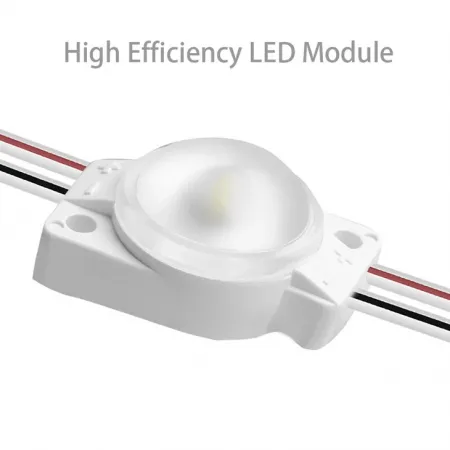
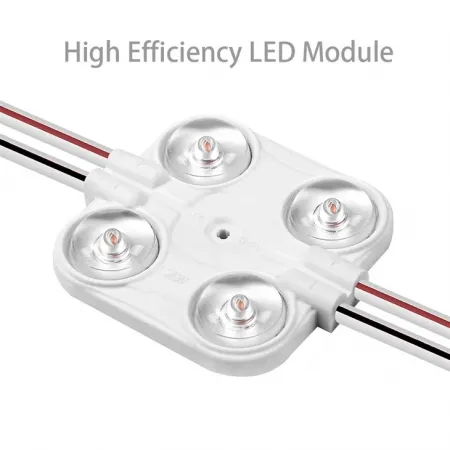
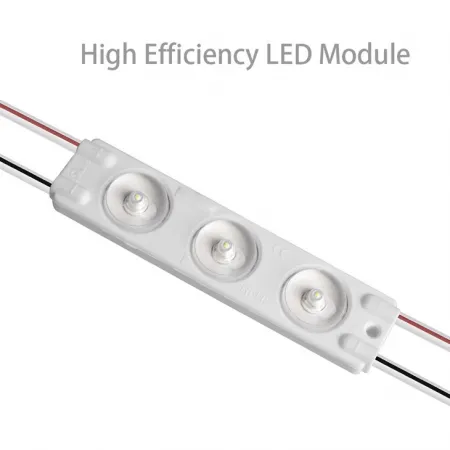
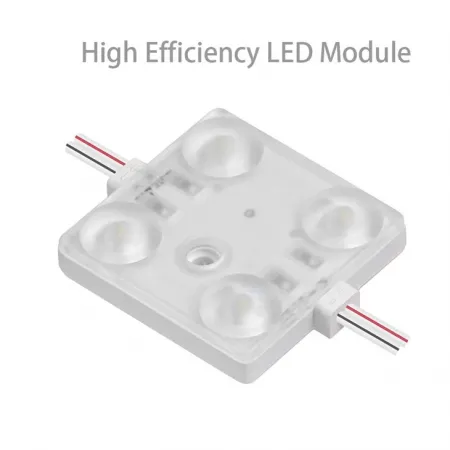
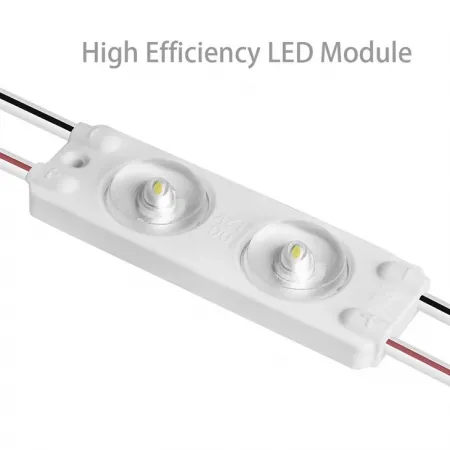
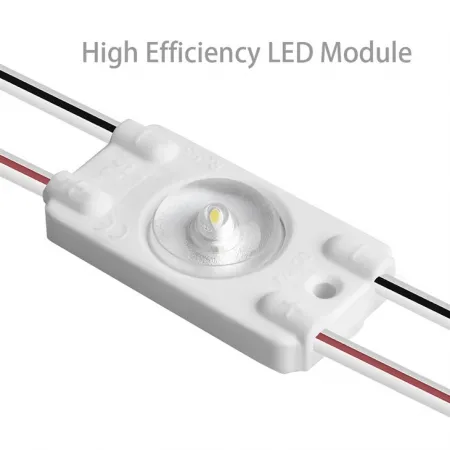
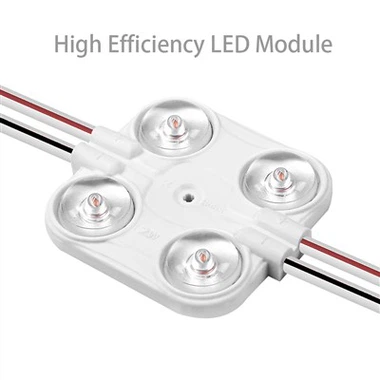
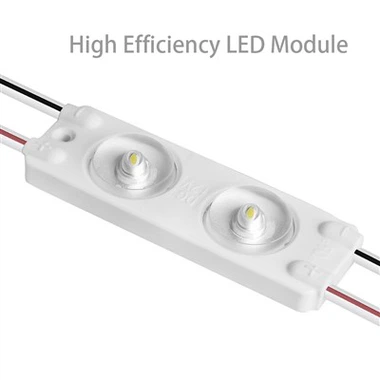
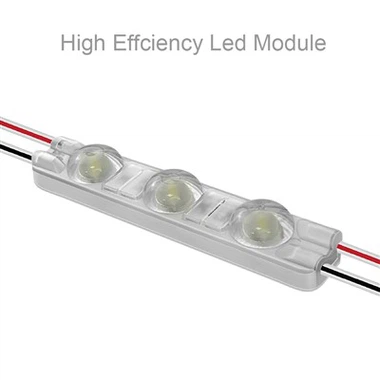
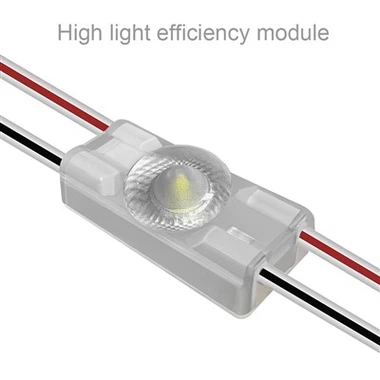
It is measured in lumens per watt (lm/W). High-efficiency LED modules are preferred in applications that require significant energy savings, such as street lighting and industrial lighting. These modules produce more than 120 lumens per watt. They feature the latest chip technology to maximize light output and minimize heat and power loss. These modules are ideal for applications requiring maximum light output with lower power consumption.
Advantages of High Efficiency LED Module

Energy Savings

High Brightness

Compact Design

Reduced Heat Emission
Our Factory
HansonLed Ltd is a high-tech green illumination enterprise and a high-tech enterprise in Guangdong province, established in 2013, occupied area of 2,500 square meters factory.
Our Certificate
With senior engineers' professional expertise and continuing research, we have obtained national intellectual property,The company has passed the "ISO9001 international quality system certification" and CE, RoHS, PSE, UL, Reach certificate for dozens of our products. HansonLed owns the strongest R & D team.
Product
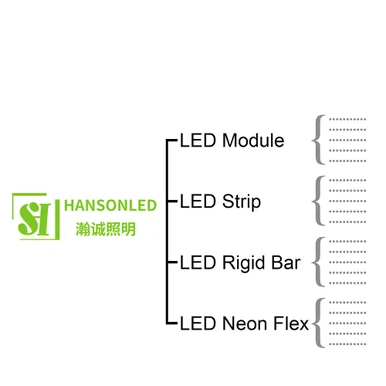
HansonLed is foucs on the LED lighting Source products. At present, HansonLed's indoor LED lighting product ranges cover LED Flexible Strips,LED Linear Strip. LED Module, LED Rigid bar, LED Ambient Light hundreds of varieties, widely applied in Channal Letter,Shops sign, Lighting box ,housing and accommodation, public facilities.
Our Service
10 Years Production experience in LED Strip ,LED Module and LED Lighting products.
More stable product quality
Our customers are located in more than 30 countries including North America, South America and Europe. We are located in the industrial belt and can obtain high-quality parts at low cost
OEM/ODM are accepted
You can get the ultimate cost performance by buying our products. Pick up the goods directly from the factory, the price is more favorable
How Do You Power a High Power LED
To power a high-power LED, you typically need a constant current driver or a power supply capable of delivering the required current and voltage. Here's a general process for powering a high-power LED:
Determine the electrical specifications
Check the datasheet of your LED to find the recommended forward current (measured in mA or A) and forward voltage (measured in volts). These specifications will vary depending on the specific LED model.
Select an appropriate power supply
Choose a power supply that can provide the required voltage and current for the LED. Ensure that the power supply is designed to deliver a constant current if necessary.
Connect the LED to the power supply
Connect the positive terminal (+) of the power supply to the anode (+) of the LED and the negative terminal (-) of the power supply to the cathode (-) of the LED. The anode and cathode terminals are usually indicated on the LED itself or in its datasheet.
Add a current-limiting resistor (if required)
Some high-power LEDs may not require a current-limiting resistor if you're using a constant current driver. However, if you're using a power supply with a fixed voltage, you may need to add a series resistor to limit the current flowing through the LED. You can calculate the resistance value using Ohm's law (R = V/I), where V is the voltage across the resistor (the difference between the power supply voltage and the forward voltage of the LED), and I is the desired forward current.
Test and monitor
Once everything is connected, test the setup by turning on the power supply. Make sure the LED is functioning properly and the current and voltage are within the specified limits. It's advisable to use appropriate measuring instruments to monitor the current and voltage during operation.
Remember to take precautions when working with high-power LEDs, such as using heat sinks to dissipate excess heat and ensuring proper thermal management to prevent damage to the LED.
How Can You Use Our Light-Emitting Diode Module Lights
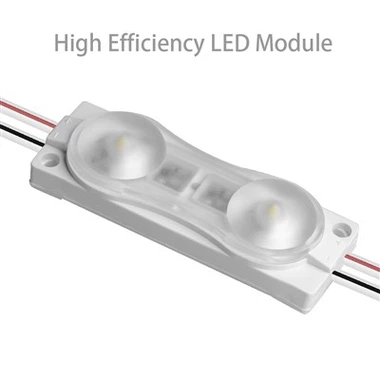
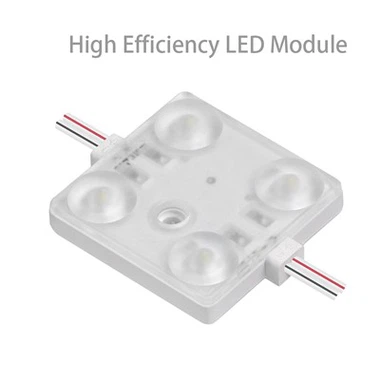
Everyone knows that businesses employ light-emitting diode module lights to brighten up shop signage lighting and outdoor advertisements. Nevertheless, people can utilize these display modules for different uses encompassing: Accent and outdoor landscape lighting
Strip lighting in cabinets, drawers, cupboards, and other small bathroom spaces- for instance, both sides or bathroom mirror lining sides, utilizing light on them would offer a decorative look. Lighting up the vehicle or car dashboard. People can also utilize it as reading or night lights. Light-emitting diode flashlights and headlights.
Light-emitting diode display modules are simply low profile and hidden, nevertheless, they can yet form attractive lighting impacts for both external and internal applications. They produce the best lights if people are searching for small accent lights.
Electrical professionals can easily cut light-emitting diode display modules and re-connect them in different ways, even when they create different lighting patterns according to their desire, and re-work them to meet the needs of their house project. Based on their size, light-emitting diode display modules are categorized into large, standard or small.
The small light-emitting diode display module
The small light-emitting diode display module is ideal for people with a limited area. People can utilize these display modules for display modules, party events, marriage celebrations and signage lighting. The valuable and safe variety of light-emitting diode lights does not lead to issues, encompassing heating or flickering, and saves power.
The standard light-emitting diode module
This standard sized light-emitting diode display module could be a nice choice for outdoor lighting. Apart from we offer them with an IP65 rating making them water-resistant and more dependable. This light has different features and long reach to meet the lighting needs. Such characteristics help in cutting down color deviation and light degradation.
Huge light-emitting diode module
The huge light-emitting diode display module offers a lot of return depth. The spaces between the surface and light-emitting diode emitters is known as return depth. People would find a return depth of at least fifty millimeters in huge light-emitting diode display modules. Therefore, these display modules provide greater energy efficiency and a wider beam angle.
How to Choose LED Module
Understand the basics of LED modules
LED modules are products made by arranging and packaging a certain number of light-emitting diodes (LEDs) in a regular manner, and then adding waterproofing and other processes. It is widely used in advertising fonts, logos, display screens and other fields, and can provide night lighting and dynamic visual effects.
Consider the type of LED module
There are many types of LED modules, which are mainly classified according to packaging methods, lamp bead types, driving methods, etc.
Packaging methods: Common packaging methods include direct plug-in, SMD, COB (Chip on Board), etc. Direct plug-in is suitable for small-pitch display, while SMD is more suitable for outdoor large-screen display. COB packaging has higher integration and better heat dissipation performance.
Lamp bead type: There are various types of LED lamp beads, such as RGB (red, green and blue primary colors) lamp beads, COB integrated lamp beads, etc. RGB lamp beads can achieve colorful changes, while COB integrated lamp beads have higher light efficiency and better color rendering.
Driving mode: The driving modes of module LEDs include constant current driving and constant voltage driving. Constant current driving can ensure the stability of LED current, thereby maintaining consistent brightness; constant voltage driving is suitable for occasions with small voltage fluctuations.
Choose according to the application scenario
Indoor or outdoor: LED modules used outdoors need to have a higher waterproof level (such as IP65 or higher) and dustproof performance to cope with severe weather conditions.
Brightness requirements: Select the appropriate LED module according to the brightness requirements of the application scenario. Generally speaking, outdoor billboards and road lighting require high-brightness LED modules.
Display effect: If you need to display high-definition text and images, you should choose a small-pitch LED module. This type of module has a higher pixel density and better display effect.
Pay attention to the performance parameters of the LED module
Color: Select a single-color, seven-color or full-color single-point controlled LED module as needed.
Voltage: Make sure that the voltage of the selected LED module matches the power supply to avoid damage caused by excessive or low voltage.
Working temperature: Understand the working temperature range of the LED module to ensure that it will not exceed its limit value during use.
Lighting angle: Choose a suitable lighting angle according to the lighting requirements of the application scenario.
Brightness: Luminous intensity and lumen are important indicators for measuring the brightness of the LED module.
Waterproof level: LED modules used outdoors should have a high waterproof level.
Size and power: Choose the appropriate size and power according to the installation space and energy consumption requirements.
Consider quality and price
Quality: Choose well-known brands and LED module manufacturers with a good reputation to ensure product quality and after-sales service.
Price: Under the premise of meeting performance requirements, comprehensively consider price factors and choose products with high cost performance.
LED Advertising Module Color Temperature Definition and Classification
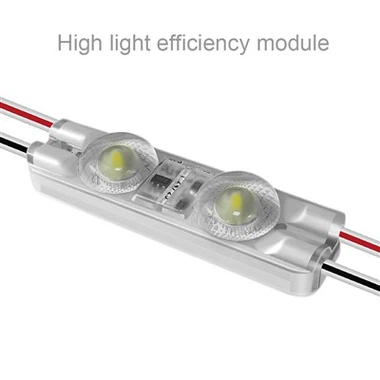
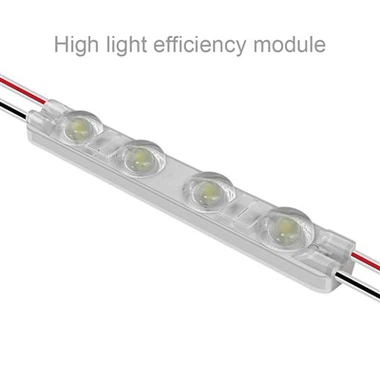
The white light color temperature in the LED advertising module is usually measured in Kelvin (K), and according to the different color temperature, white light can be roughly divided into the following categories:
Warm white: The color temperature is generally between 2700K and 3500K, and the light color is yellowish, similar to the light color emitted by incandescent lamps, giving people a warm and comfortable feeling.
Positive white light: The color temperature is between 4500K and 5500K, the light color is close to natural light, bright and comfortable, suitable for most indoor and outdoor lighting needs.
Cold white light: The color temperature is above 5700K to 6500K, the light color is blue, bright and cold, similar to sunlight under a clear sky.
The difference between different color temperature white light
1. Visual effects
Warm white: Create a warm and comfortable atmosphere, suitable for advertising scenes that need to create a family atmosphere or a relaxing environment, such as advertising in the home, catering and other industries.
Positive white light: Provides natural and true lighting effects, suitable for displaying product details or advertising scenes requiring clear visual effects, such as advertising in electronic products, jewelry and other industries.
Cold white: Gives people a bright and refreshing feeling, suitable for advertising scenes that need to emphasize the sense of science and technology, modern sense or fresh atmosphere, such as the advertising of science and technology products, fashion brands and other industries.
2. Create atmosphere
Different color temperatures of white light can create a completely different atmosphere. Warm white light is suitable for creating a warm and romantic atmosphere; Positive white light provides a balanced, natural lighting environment; And cold white light can create a fresh, cold atmosphere.
3. Application scenario
Warm white light: Suitable for family homes, bedrooms, restaurants and other places that need to create a warm atmosphere.
Positive white light: Widely used in commercial displays, office places, public places and other
scenes requiring clear lighting and good visual effects.
Cold white light: Suitable for outdoor advertising, science and technology exhibitions, modern art exhibitions and other scenes that need to emphasize modern and scientific sense.
4. Visual comfort
Visual comfort is closely related to the choice of color temperature. Too high a color temperature (such as cold white light) may give people a harsh feeling, affecting the viewing experience; And too low color temperature (such as warm white light) may cause the picture to be yellow, affecting the color reproduction degree. Therefore, when selecting the color temperature of the LED advertising module, it is necessary to comprehensively consider the specific application scenarios and audience needs.
Tool required: wire strippers, drilland screw driver and screws
1. Noting metal Box depth, width and face material, choose the suitable spacing and quantity of led module, Carefully choose the acrylic panel, the light-diffusion and permeating of which has great effect on brightness and uniform of the light from boxes.
2. Clean and remove all debris inside the channel letters.
3. Using LED placement from Step 1, remove tapes on the backside and stick LED Module into place.
4. For firm fixing, use screws to secure the led module within the channel letter.
5. Drill the holes at the bottom or side of the letters for the wire connection to the DC power supply wire access.
6. LED Modules may be connected in series or parallel with connectors. Cap all usused wires. The strand of module should not be loop to creat a closed circuit.
7. Run a wire from the Power supply to each channel letter and connect to the first LED module on the strip. Must be used with 12V Power supplies.
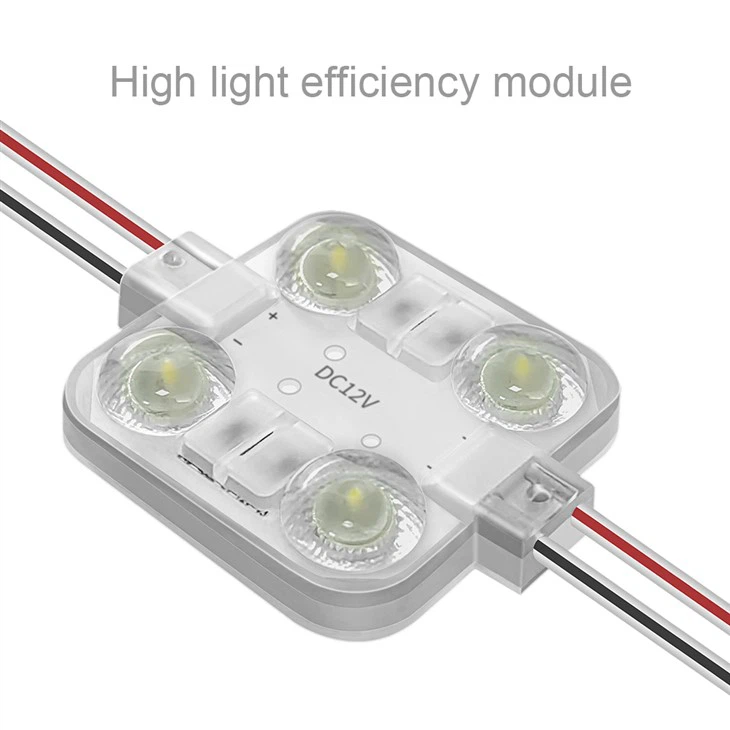
8. Connect the Red wire(+) of the LED Module to the Red wire (+) of the LED Power supply. Connect the black wire(-) of the led module to the black wire (-) of the power supply.
Testing LED modules is an essential part of ensuring their quality, performance, and reliability. Here are some common tests conducted on LED modules:
Visual Inspection
A visual inspection is the first step in testing LED modules. It involves examining the modules for any physical defects, such as damaged components, soldering issues, or incorrect placement of LEDs.
Electrical Testing
Various electrical tests are performed to check the functionality of LED modules. These tests include:
Forward Voltage Test: Measures the voltage required to turn on an LED.
Reverse Voltage Test: Checks the LED's ability to withstand reverse voltage.
Current Test: Measures the current flowing through the LED at a specific voltage.
Power Test: Determines the power consumption of the LED module.
Luminous Flux Measurement
This test measures the total amount of visible light emitted by the LED module in lumens. It ensures that the module produces the specified amount of light.
Color Quality and Color Temperature Test
LEDs come in different colors and color temperatures. Testing ensures that the LED module produces the desired color and meets the required color temperature specifications.
Thermal Testing
LED modules generate heat during operation, which can affect their performance and lifespan. Thermal testing helps evaluate the module's ability to dissipate heat properly and prevent overheating.
Environmental Testing
This involves subjecting the LED modules to various environmental conditions, such as temperature extremes, humidity, vibration, and shock, to assess their reliability in harsh operating conditions.
Lifetime and Reliability Testing
LED modules should undergo accelerated aging tests to estimate their lifespan under real-world operating conditions. This test helps manufacturers provide estimated lifetime ratings for their products.
Water and Dust Resistance Test
If the LED modules are designed for outdoor or wet environments, they should undergo tests to ensure they are adequately protected against water and dust ingress.
EMI/EMC Testing
Electromagnetic Interference (EMI) and Electromagnetic Compatibility (EMC) tests are conducted to ensure that the LED modules do not emit harmful interference or are not affected by external electromagnetic fields.
Photometric Distribution Test
This test measures and analyzes the light distribution pattern of the LED module to ensure it meets the intended lighting requirements.
Electrical Safety Testing
LED modules should comply with electrical safety standards to ensure they do not pose any hazards to users or the electrical system.
It's important to note that the specific tests required for LED modules may vary depending on the application and intended use. Manufacturers often have their own testing procedures to ensure the quality and performance of their LED modules.
FAQ
We're well-known as one of the leading high efficiency led module manufacturers and suppliers in China. Our factory offers high quality high efficiency led module made in China with low price. Welcome to contact us for customized service.
