

What is the heat dissipation of a COB LED strip?
Fri 18,2025
Leave a message
Heat dissipation is a crucial aspect when it comes to COB (Chip on Board) LED strips, especially for us as a COB LED strip supplier. In this blog, we'll delve into what heat dissipation of a COB LED strip is, why it matters, and how it impacts the performance and lifespan of these lighting solutions.
What is Heat Dissipation in COB LED Strips?
COB LED strips are known for their high - density light output. Unlike traditional LED strips where individual LEDs are placed at intervals, COB technology mounts multiple LED chips directly onto a single substrate. This design allows for a more uniform and brighter light source. However, as with any electrical device that emits light, COB LED strips generate heat during operation.
Heat dissipation refers to the process by which this generated heat is transferred away from the COB LED chips to the surrounding environment. It is essential because excessive heat can have detrimental effects on the performance and longevity of the LED strips. When the temperature of the COB LED chips rises, the efficiency of light emission decreases. This means that the strip will produce less light for the same amount of electrical power input. Moreover, high temperatures can also cause the color of the light to shift, leading to inconsistent lighting quality.
Why Heat Dissipation Matters
Performance
As mentioned earlier, heat affects the performance of COB LED strips. When the temperature of the LED chips increases, the forward voltage of the LEDs changes. This can result in a decrease in the luminous flux, or the total amount of visible light emitted by the strip. For example, a COB LED strip that is rated to produce 1000 lumens at a normal operating temperature might only produce 800 lumens when the temperature rises significantly. This reduction in light output can be a major issue in applications where consistent and high - level illumination is required, such as in commercial lighting or display lighting.
Lifespan
The lifespan of COB LED strips is also closely related to heat dissipation. LEDs are semiconductor devices, and high temperatures can accelerate the degradation of the semiconductor materials. The higher the operating temperature, the shorter the lifespan of the LEDs. A well - designed heat dissipation system can help keep the temperature of the COB LED chips within a safe range, thereby extending the lifespan of the strip. For instance, if a COB LED strip has a rated lifespan of 50,000 hours at a certain operating temperature, operating it at a much higher temperature without proper heat dissipation could reduce its lifespan to as little as 20,000 hours.
Factors Affecting Heat Dissipation
Substrate Material
The substrate on which the COB LED chips are mounted plays a significant role in heat dissipation. A good substrate material should have high thermal conductivity, which allows heat to be transferred away from the chips quickly. Common substrate materials for COB LED strips include aluminum and ceramic. Aluminum substrates are widely used because they are relatively inexpensive and have good thermal conductivity. Ceramic substrates, on the other hand, have even higher thermal conductivity and better electrical insulation properties, but they are more expensive.
Heat Sink Design
A heat sink is a passive cooling device that helps dissipate heat from the COB LED strip. It typically consists of fins or other structures that increase the surface area of the device, allowing for more efficient heat transfer to the surrounding air. The design of the heat sink, such as the number and shape of the fins, can have a significant impact on its cooling efficiency. For example, a heat sink with closely spaced and tall fins will generally have better heat dissipation performance than one with widely spaced and short fins.
Ventilation
Proper ventilation is also crucial for heat dissipation. If the COB LED strip is installed in an enclosed space with poor air circulation, the heat will build up around the strip, leading to higher operating temperatures. In such cases, additional ventilation measures, such as fans or vents, may be required to ensure that the heat can be effectively dissipated.
Our COB LED Strips and Heat Dissipation
At our company, we understand the importance of heat dissipation in COB LED strips. That's why we have implemented several measures to ensure optimal heat management in our products.
High - Quality Substrates
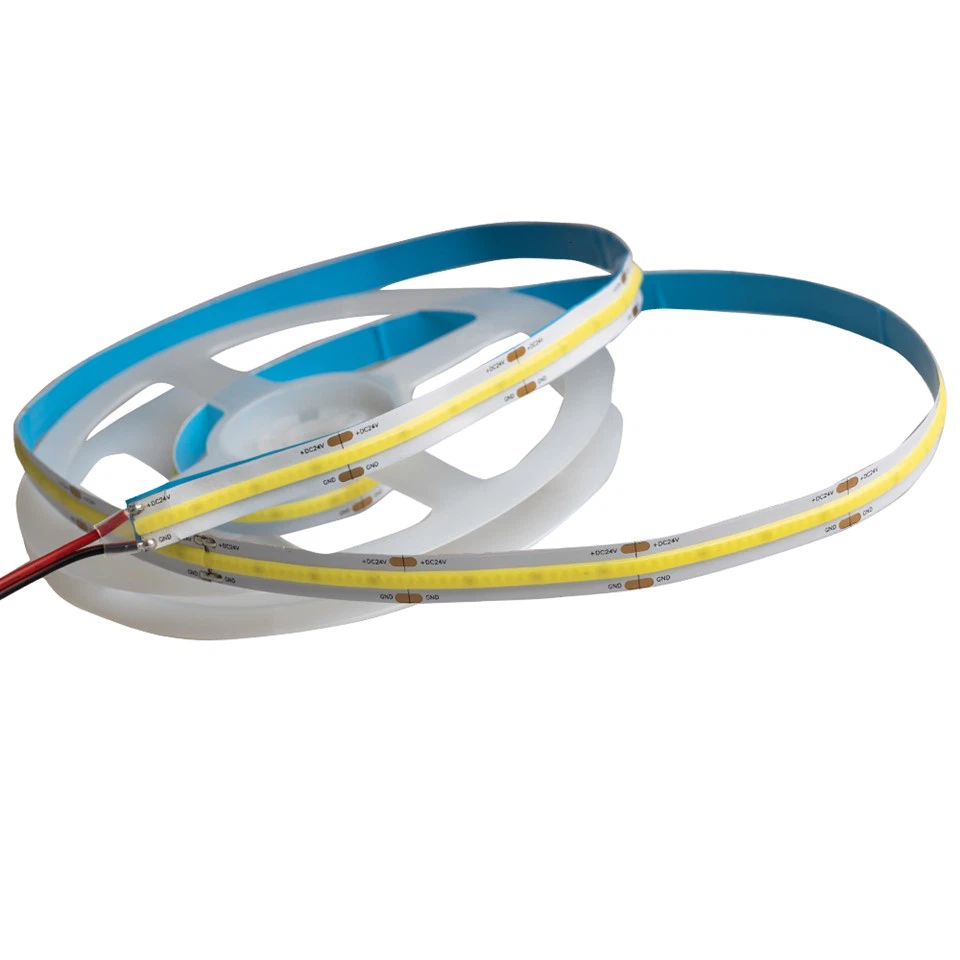
We use high - grade aluminum substrates in our COB LED Strip 504 chips. These substrates have excellent thermal conductivity, allowing heat to be quickly transferred away from the COB LED chips. This helps maintain the performance and color consistency of the LED strips even during prolonged use.
Efficient Heat Sink Design
Our COB LED Tape is equipped with a well - designed heat sink. The heat sink has a unique fin design that maximizes the surface area for heat transfer. This design not only improves the heat dissipation efficiency but also ensures that the LED tape remains cool to the touch during operation.
Consideration for Installation
We also provide detailed installation instructions to ensure proper ventilation for our Free Cut COB Led Strip. We recommend leaving sufficient space around the strip for air circulation and avoiding installation in enclosed or poorly ventilated areas. By following these guidelines, customers can ensure that the COB LED strips operate at optimal temperatures and achieve their maximum performance and lifespan.
Contact Us for Procurement
If you are in the market for high - quality COB LED strips with excellent heat dissipation capabilities, we invite you to contact us for procurement. Our team of experts is ready to assist you in selecting the right product for your specific needs. Whether you are looking for lighting solutions for commercial, residential, or industrial applications, we have the expertise and products to meet your requirements. Reach out to us today to start a conversation about how our COB LED strips can enhance your lighting projects.
References
- "LED Lighting Handbook" by John Doe
- "Semiconductor Lighting Technology" by Jane Smith
- Industry reports on COB LED technology and heat management
