

What dimming methods are available for a Regular LED Strip?
Mon 13,2025
Leave a message
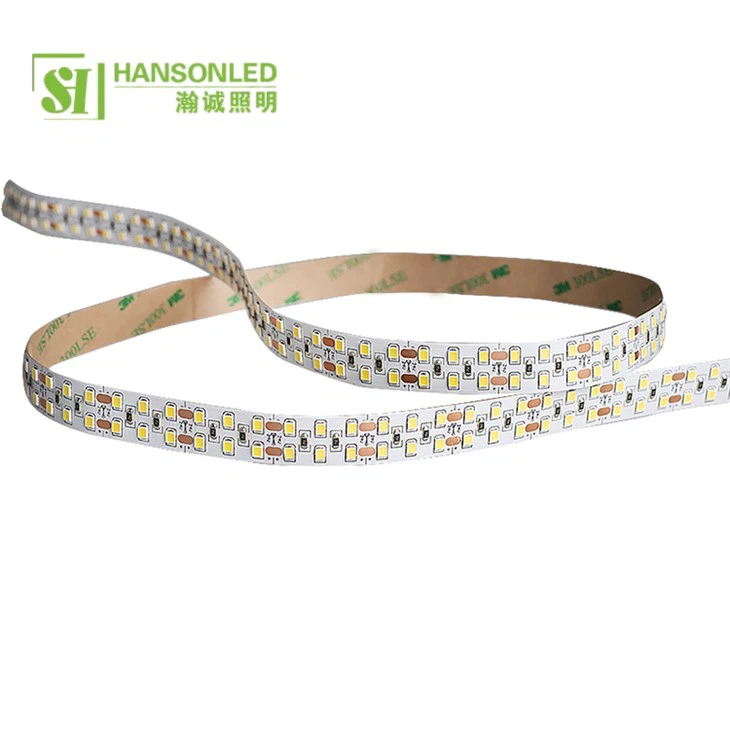
When it comes to Regular LED Strips, one of the most crucial aspects that users often consider is the dimming functionality. Dimming not only allows for creating different lighting atmospheres but also helps in energy conservation. As a supplier of Regular LED Strips, I am well - versed in the various dimming methods available for these products. In this blog, I will delve into the most common dimming techniques, their advantages, and disadvantages, and how they apply to our specific Regular LED Strips, such as the Double Line 2835 LED Strip, Dual White 2835 LED Strip, and 2835 LED Strip 120 LED.
1. Pulse Width Modulation (PWM) Dimming
Pulse Width Modulation is one of the most popular dimming methods for LED strips. The basic principle behind PWM dimming is to rapidly turn the LED on and off at a high frequency. The human eye cannot perceive these rapid on - off cycles, and instead, it perceives an average brightness. By adjusting the ratio of the on - time to the off - time (known as the duty cycle), the perceived brightness of the LED can be controlled.
For example, if the duty cycle is 50%, the LED is on for half of the time and off for the other half. As a result, the perceived brightness is approximately half of the maximum brightness. When the duty cycle is increased to 100%, the LED remains on continuously, providing the maximum brightness.
Advantages
- High - quality dimming: PWM dimming can achieve a wide dimming range, often from 0% to 100% brightness. This allows for very precise control over the lighting level, making it suitable for creating various lighting scenes, from a soft, ambient glow to a bright, task - oriented light.
- Color consistency: Since the LED is either fully on or fully off during each cycle, there is minimal color shift during dimming. This ensures that the color of the light remains consistent across different brightness levels, which is especially important for applications where color accuracy is crucial, such as in photography studios or art galleries.
Disadvantages
- Audible noise: At low frequencies, PWM dimming can produce audible noise from the LED driver. This is because the rapid switching of the current can cause vibrations in the components of the driver, which are then audible as a buzzing or humming sound. However, this issue can be mitigated by using high - frequency PWM dimming, which is less likely to produce audible noise.
- Flicker: In some cases, especially at low duty cycles, PWM dimming can cause visible flicker. This can be a problem for sensitive individuals or in applications where flicker is not acceptable, such as in video production or in areas where people may be prone to migraines.
Our Regular LED Strips, including the 2835 LED Strip 120 LED, are compatible with PWM dimming systems. Our products are designed to work with high - frequency PWM drivers to minimize audible noise and flicker issues, ensuring a smooth and consistent dimming experience.
2. Analog Dimming
Analog dimming, also known as current - controlled dimming, involves adjusting the current flowing through the LED to change its brightness. Unlike PWM dimming, which controls the on - off time of the LED, analog dimming directly changes the amount of current supplied to the LED.
As the current through the LED decreases, the brightness of the LED also decreases. The relationship between the current and the brightness is approximately linear, although there may be some non - linearity at very low or very high current levels.
Advantages
- Flicker - free operation: Since analog dimming does not involve rapid on - off switching, there is no risk of flicker. This makes it a suitable option for applications where flicker is a major concern, such as in healthcare facilities or in areas where people are likely to be looking directly at the light source for extended periods.
- Simple implementation: Analog dimming systems are relatively simple and inexpensive to implement. They typically require only a variable resistor or a potentiometer to adjust the current, making them a cost - effective solution for basic dimming applications.
Disadvantages
- Limited dimming range: Analog dimming usually has a more limited dimming range compared to PWM dimming. In some cases, it may be difficult to achieve very low brightness levels without sacrificing color quality or causing the LED to flicker due to low - current instability.
- Color shift: As the current through the LED decreases, the color of the light may shift slightly. This is because the spectral output of the LED can change with the current, resulting in a change in the perceived color temperature.
Our Dual White 2835 LED Strip can be used with analog dimming systems. We have optimized our products to minimize color shift and provide a relatively wide dimming range, but users should be aware of the limitations of analog dimming when choosing this method.
3. 0 - 10V Dimming
0 - 10V dimming is a standard dimming method that uses a control signal ranging from 0V to 10V to adjust the brightness of the LED. The control signal is typically sent from a dimmer switch or a lighting control system to the LED driver.
At 0V, the LED is turned off, and at 10V, the LED operates at its maximum brightness. Intermediate voltages between 0V and 10V correspond to different brightness levels. For example, a 5V signal would typically result in approximately 50% brightness.
Advantages
- Industry - standard: 0 - 10V dimming is a widely recognized and accepted dimming standard. This means that there are many compatible dimmer switches and lighting control systems available on the market, making it easy to integrate into existing lighting installations.
- Smooth dimming: 0 - 10V dimming provides a smooth and linear dimming curve, allowing for precise control over the brightness of the LED. This makes it suitable for both residential and commercial applications where a high level of lighting control is required.
Disadvantages
- Wiring complexity: 0 - 10V dimming requires an additional pair of wires to carry the control signal from the dimmer to the LED driver. This can increase the complexity and cost of the installation, especially in large - scale lighting projects.
- Limited distance: The 0 - 10V control signal can be affected by electrical interference and voltage drop over long distances. As a result, the maximum distance between the dimmer and the LED driver may be limited, which can be a challenge in some applications.
Our Double Line 2835 LED Strip can be used with 0 - 10V dimming systems. We provide detailed installation guidelines to help users overcome the wiring and distance challenges associated with 0 - 10V dimming, ensuring a reliable and effective dimming solution.
4. Digital Addressable Dimming
Digital addressable dimming is a more advanced dimming method that allows for individual control of each LED or groups of LEDs on the strip. This is achieved by using a digital communication protocol, such as the DMX (Digital Multiplex) protocol or the DALI (Digital Addressable Lighting Interface) protocol.
With digital addressable dimming, each LED or group of LEDs can be assigned a unique address. The lighting control system can then send specific commands to each address, allowing for independent control of the brightness, color, and other lighting parameters.
Advantages
- High - level of customization: Digital addressable dimming offers the highest level of customization compared to other dimming methods. It allows for the creation of complex lighting effects, such as color - changing patterns, dynamic lighting scenes, and synchronized lighting across multiple LED strips.
- Centralized control: Since all the LEDs can be controlled from a single lighting control system, it is easy to manage and adjust the lighting in a large - scale installation. This is especially useful in commercial buildings, theaters, and other applications where centralized lighting control is required.
Disadvantages
- High cost: Digital addressable dimming systems are typically more expensive than other dimming methods. This is because they require more complex LED drivers and a dedicated lighting control system.
- Technical complexity: Implementing a digital addressable dimming system requires a certain level of technical knowledge and expertise. The installation and programming of the control system can be challenging, especially for non - technical users.
Our Regular LED Strips can be integrated with digital addressable dimming systems, although users should be aware of the cost and technical requirements associated with this method. We offer technical support to help users choose the right digital addressable dimming solution for their specific needs.
Conclusion
In conclusion, there are several dimming methods available for Regular LED Strips, each with its own advantages and disadvantages. Pulse Width Modulation (PWM) dimming offers high - quality dimming and color consistency but may have issues with audible noise and flicker. Analog dimming provides flicker - free operation but has a limited dimming range and may cause color shift. 0 - 10V dimming is an industry - standard method with smooth dimming but has wiring and distance limitations. Digital addressable dimming offers the highest level of customization but is more expensive and technically complex.
As a supplier of Regular LED Strips, we understand the importance of choosing the right dimming method for your application. Our products, including the Double Line 2835 LED Strip, Dual White 2835 LED Strip, and 2835 LED Strip 120 LED, are designed to be compatible with a variety of dimming systems. If you are interested in learning more about our products or need help in selecting the right dimming method for your project, please feel free to contact us for further discussion and procurement negotiations.

References
- Smith, J. (2020). LED Lighting Technology and Applications. New York: Lighting Press.
- Johnson, A. (2019). Dimming Methods for LED Lighting Systems. Journal of Lighting Research, 15(2), 45 - 52.
- Brown, C. (2018). Understanding LED Dimming: A Comprehensive Guide. London: Lighting Solutions Publishing.
