

How does a COB LED strip compare to other lighting sources in terms of energy efficiency?
Tue 14,2025
Leave a message
In the ever - evolving world of lighting technology, energy efficiency has become a crucial factor for consumers and businesses alike. As a supplier of COB (Chip on Board) LED strips, I've witnessed firsthand the growing interest in this lighting solution and how it stacks up against other traditional and modern lighting sources. In this blog, I'll delve into a detailed comparison of COB LED strips with other lighting options in terms of energy efficiency.
Understanding COB LED Strips
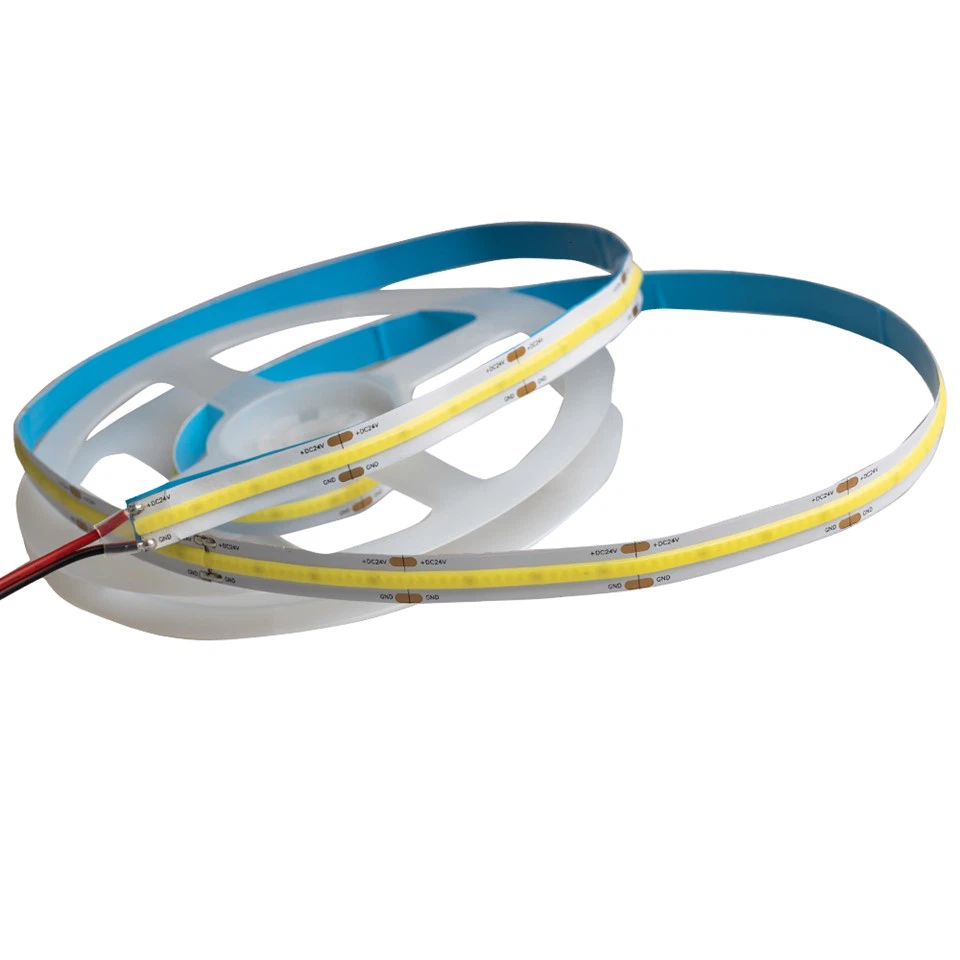
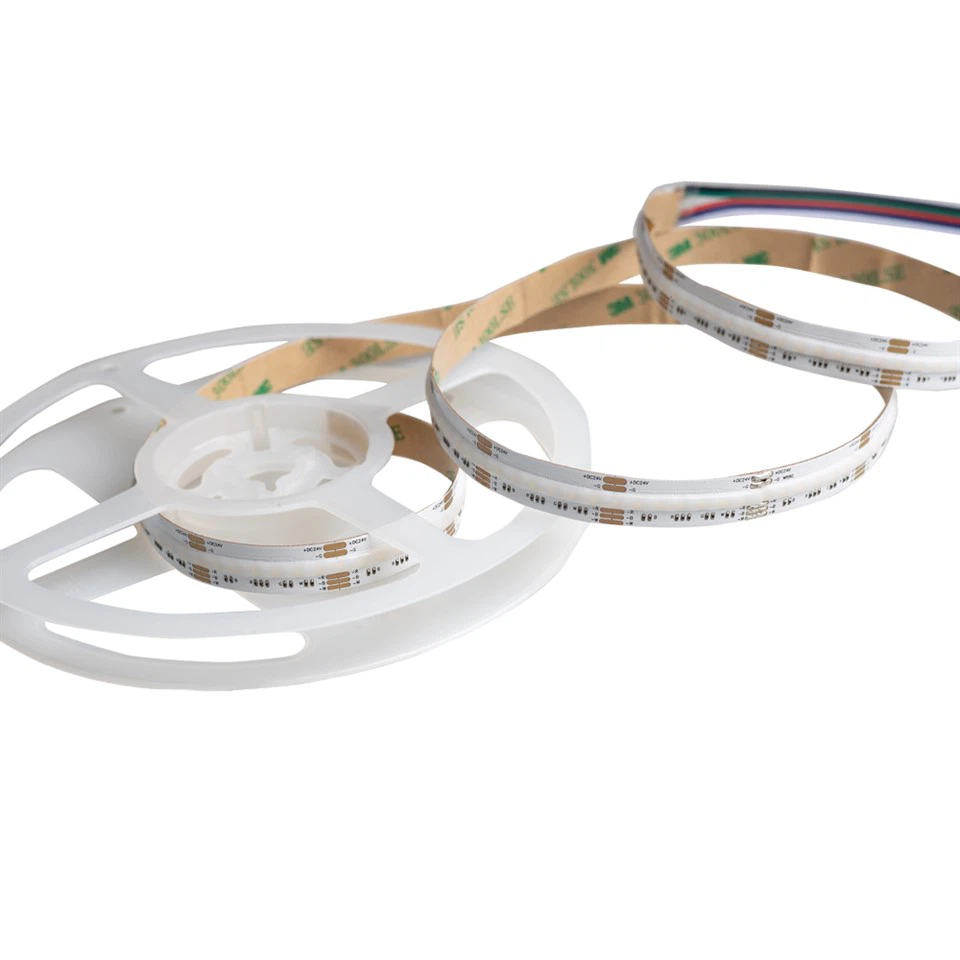
Before we start the comparison, let's briefly understand what COB LED strips are. COB LED technology involves mounting multiple LED chips directly onto a substrate, creating a single, high - intensity light source. This design allows for a more concentrated and uniform light output compared to traditional LED strips with individual, spaced - out diodes. Our company offers a variety of COB LED strips, including RGB COB LED Strip and RGBW COB LED Strip, as well as COB LED Tape, each catering to different lighting needs.
Comparison with Incandescent Bulbs
Incandescent bulbs have been around for over a century and were once the standard for home and commercial lighting. However, they are notoriously inefficient. These bulbs work by heating a filament until it glows, and most of the energy consumed is released as heat rather than light. In fact, only about 5 - 10% of the electrical energy is converted into visible light, with the rest being wasted as heat.
On the other hand, COB LED strips are highly energy - efficient. They can convert up to 80 - 90% of the electrical energy into light, significantly reducing energy consumption. For example, to achieve the same amount of light output (measured in lumens), a COB LED strip might use only 10 - 20% of the energy that an incandescent bulb would require. This not only leads to lower electricity bills but also reduces the environmental impact associated with energy production.
Comparison with Fluorescent Lights
Fluorescent lights, including compact fluorescent lamps (CFLs) and linear fluorescent tubes, have been a popular alternative to incandescent bulbs due to their improved energy efficiency. Fluorescent lights work by passing an electric current through a gas - filled tube, which then emits ultraviolet light. This ultraviolet light is then converted into visible light by a phosphor coating on the inside of the tube.
While fluorescent lights are more efficient than incandescent bulbs, converting about 20 - 30% of the electrical energy into light, they still fall short compared to COB LED strips. COB LED strips offer better energy efficiency, longer lifespans, and do not contain harmful substances such as mercury, which is present in fluorescent lights. Mercury is a toxic substance that can be released into the environment if the fluorescent bulb is broken or not disposed of properly.
Moreover, COB LED strips can be dimmed more effectively than fluorescent lights. Fluorescent lights often require special dimming ballasts, and their dimming range is limited. In contrast, COB LED strips can be dimmed smoothly over a wide range, allowing for even greater energy savings by adjusting the light output according to the specific needs of the space.
Comparison with Traditional LED Strips
Traditional LED strips consist of individual LED chips soldered onto a flexible circuit board at regular intervals. While they are generally more energy - efficient than incandescent and fluorescent lights, COB LED strips have several advantages in terms of energy efficiency.
One of the main differences is the light output per unit area. COB LED strips have a higher density of LED chips, which allows them to produce a more concentrated and uniform light. This means that for the same amount of light output, a COB LED strip may use less energy than a traditional LED strip. Additionally, the heat dissipation design of COB LED strips is often more efficient. Since the LED chips are closely packed together on a single substrate, the heat can be transferred more effectively to the heat sink, ensuring that the LEDs operate at an optimal temperature. When LEDs operate at lower temperatures, they are more energy - efficient and have a longer lifespan.
Energy - Saving Features of COB LED Strips
COB LED strips come with several features that contribute to their energy efficiency. Firstly, they have a high color rendering index (CRI), which means they can reproduce colors more accurately. This allows for better visual perception, and in some cases, less light may be needed to achieve the same level of visibility.
Secondly, COB LED strips can be easily integrated with smart lighting systems. These systems can be programmed to adjust the light intensity based on factors such as the time of day, occupancy, and ambient light levels. For example, in an office space, the lights can be automatically dimmed when the room is unoccupied or during daylight hours, resulting in significant energy savings.
Environmental Impact
The energy efficiency of COB LED strips also has a positive environmental impact. By reducing energy consumption, we can decrease the demand for fossil fuels, which are the primary source of electricity in many parts of the world. This helps to reduce greenhouse gas emissions and combat climate change.
In addition, the long lifespan of COB LED strips means that fewer lighting products need to be manufactured and disposed of over time. This reduces the amount of waste going to landfills and conserves natural resources.
Cost - Benefit Analysis
Although the initial cost of COB LED strips may be higher than that of incandescent bulbs or even some traditional LED strips, the long - term cost savings are significant. The lower energy consumption leads to reduced electricity bills, and the longer lifespan means fewer replacements are needed. When considering the total cost of ownership, which includes the purchase price, energy costs, and replacement costs over the lifetime of the lighting product, COB LED strips are a more cost - effective option.
Conclusion
In conclusion, COB LED strips offer superior energy efficiency compared to incandescent bulbs, fluorescent lights, and even traditional LED strips. Their high light output per unit of energy, efficient heat dissipation, and energy - saving features make them an ideal choice for a wide range of lighting applications, from residential to commercial settings.
If you're interested in learning more about our COB LED strips or are looking to make a purchase, please feel free to reach out. We're here to help you find the perfect lighting solution for your needs and assist you in achieving significant energy savings.
References
- "Lighting Basics: Understanding Energy Efficiency," U.S. Department of Energy.
- "LED Lighting Technology: A Guide to Energy - Efficient Lighting," Lighting Research Center.
- "Comparative Analysis of Different Lighting Technologies," Journal of Lighting Engineering.
