

How to dim an RGB LED module smoothly?
Tue 04,2025
Leave a message
Hey there! As a supplier of RGB LED modules, I often get asked about how to dim an RGB LED module smoothly. It's a common concern, especially for those who want to create the perfect lighting ambiance. In this blog post, I'll share some tips and tricks on how to achieve that smooth dimming effect.
Understanding RGB LED Modules
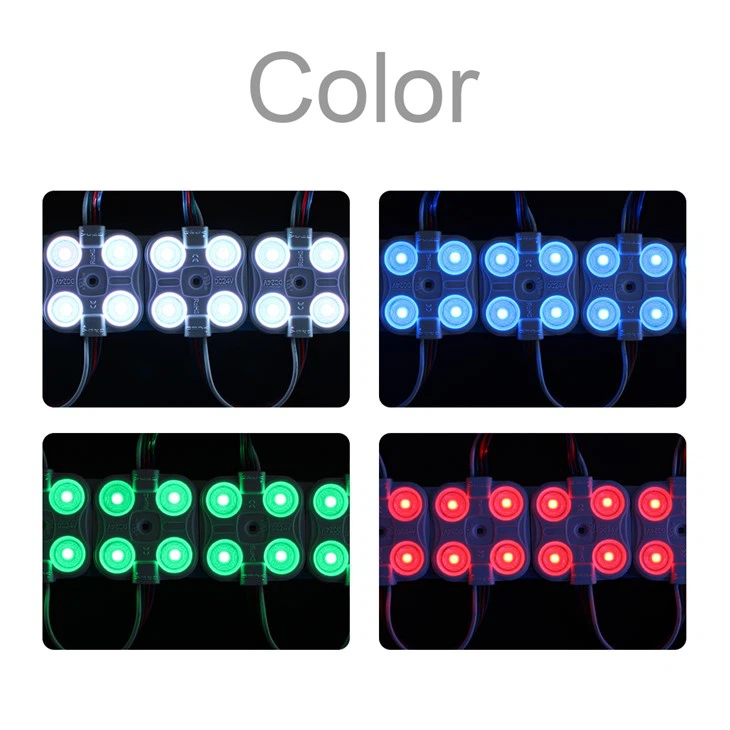
First off, let's quickly go over what RGB LED modules are. RGB stands for Red, Green, and Blue, which are the primary colors of light. By mixing these three colors in different proportions, you can create a wide range of colors. RGB LED modules typically consist of multiple LED chips that emit these three primary colors, allowing you to control the color and brightness of the light.
There are different types of RGB LED modules available in the market, such as the RGB 3 LED Module, Led RGB Module, and RGBW LED Module. The RGBW LED module includes an additional white LED, which can enhance the color accuracy and provide a wider range of lighting effects.

Why Smooth Dimming Matters
Smooth dimming is crucial for creating a comfortable and visually appealing lighting environment. When an RGB LED module dims abruptly, it can cause a noticeable flicker or color shift, which can be distracting and even cause eye strain. On the other hand, smooth dimming allows the light to gradually change in intensity and color, creating a more natural and relaxing atmosphere.
Methods for Smooth Dimming
Pulse Width Modulation (PWM)
PWM is one of the most common methods used to dim RGB LED modules. It works by rapidly turning the LED on and off at a high frequency. The ratio of the on-time to the off-time, known as the duty cycle, determines the perceived brightness of the LED. By adjusting the duty cycle, you can control the brightness of the LED smoothly.
Most microcontrollers and LED drivers support PWM, making it a convenient and cost-effective solution. However, one drawback of PWM is that it can cause audible noise at low frequencies, especially if the LED driver is not properly designed. To minimize this issue, you can use a high-frequency PWM signal or a dedicated LED driver with anti-noise features.
Analog Dimming
Analog dimming involves adjusting the voltage or current supplied to the LED to control its brightness. Unlike PWM, which turns the LED on and off, analog dimming changes the actual intensity of the light. This method can provide a smoother dimming effect, especially at low brightness levels.
However, analog dimming has some limitations. It requires a more complex circuit design and may not be as energy-efficient as PWM. Additionally, analog dimming can cause color shifts, as the color of the LED may change slightly with the change in voltage or current.
Digital Dimming
Digital dimming is a more advanced method that uses a digital signal to control the brightness of the LED. It offers several advantages over PWM and analog dimming, including higher precision, better color accuracy, and the ability to control multiple LEDs independently.
Digital dimming typically requires a dedicated LED driver or a microcontroller with digital communication capabilities, such as I2C or SPI. This method is more expensive than PWM and analog dimming but can provide a superior dimming performance, especially for high-end lighting applications.
Choosing the Right LED Driver
The LED driver plays a crucial role in achieving smooth dimming. It is responsible for regulating the current and voltage supplied to the LED module and providing the necessary control signals. When choosing an LED driver, consider the following factors:
- Dimming Range: Make sure the LED driver has a wide dimming range to allow for smooth and precise control of the brightness.
- Dimming Method: Choose an LED driver that supports the dimming method you prefer, such as PWM, analog, or digital dimming.
- Compatibility: Ensure that the LED driver is compatible with your RGB LED module in terms of voltage, current, and control signals.
- Quality and Reliability: Look for an LED driver from a reputable manufacturer to ensure its quality and reliability.
Other Tips for Smooth Dimming
- Use a High-Quality Power Supply: A stable and clean power supply is essential for smooth dimming. Avoid using a power supply that has a lot of ripple or noise, as it can cause flickering or color shifts.
- Proper Wiring and Grounding: Make sure the wiring between the LED module, LED driver, and power supply is properly installed and grounded. Loose or faulty connections can cause electrical interference and affect the dimming performance.
- Calibration and Tuning: Some LED drivers may require calibration or tuning to achieve the best dimming performance. Follow the manufacturer's instructions carefully to ensure proper calibration.
Conclusion
Smooth dimming of an RGB LED module is achievable with the right methods and components. By understanding the different dimming techniques, choosing the appropriate LED driver, and following the tips mentioned above, you can create a lighting environment that is both visually appealing and comfortable.
If you're interested in purchasing high-quality RGB LED modules or need more information on how to dim them smoothly, feel free to reach out to us. We're here to help you find the best lighting solutions for your needs.
References
- "LED Lighting Technology: Principles and Applications" by John C. Lin
- "Pulse Width Modulation (PWM) for LED Dimming" by Texas Instruments
- "Analog vs. Digital Dimming for LED Lighting" by Digi-Key Electronics
